
Table of Contents
MachineCooperate has long been a trusted partner for biscuit and candy factories worldwide, delivering state-of-the-art chocolate production lines that transform operations. In this case study, we explore how one Algerian confectionery manufacturer leveraged MachineCooperate’s innovative chocolate production line to overcome production bottlenecks and achieve remarkable growth. Facing rising demand for chocolate-coated biscuits in the North African market, the client sought a reliable solution to scale efficiently. Partnering with MachineCooperate proved transformative, yielding quantifiable improvements in productivity, cost savings, and overall profitability.
Client Challenges Before Implementation
The Algerian factory, specializing in biscuits and candies, grappled with an outdated production setup that limited output to 2,000 kilograms of chocolate-coated products per day. Inefficiencies in melting, tempering, and enrobing processes led to frequent downtime, with equipment breakdowns occurring twice weekly. This resulted in a 25% loss in potential revenue due to missed orders and inconsistent product quality. Labor costs were high, as manual interventions consumed 40 hours per shift. The client needed a turnkey chocolate production line that could handle high volumes while maintaining precision for diverse recipes.
MachineCooperate’s Chocolate Production Line Solution
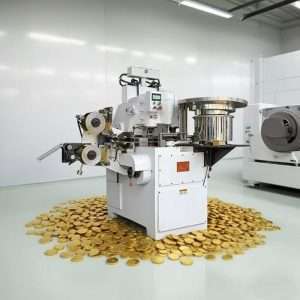
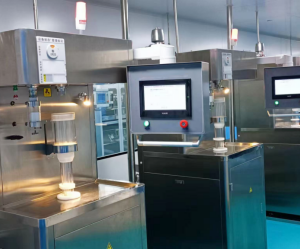
MachineCooperate responded with a fully automated chocolate production line tailored for biscuit and candy factories. The system features advanced conching, tempering, and enrobing modules capable of processing up to 5,000 kilograms daily. Integrated PLC controls ensure seamless operation, reducing human error by 90%. Customized for the client’s needs, the line supports both dark and milk chocolate variants, with adjustable viscosity for perfect coatings. This investment not only addressed immediate pain points but positioned the factory for future expansion.
Seamless Implementation and Comprehensive Support
From initial consultation to full commissioning, MachineCooperate provided end-to-end support that set the project apart. Our team conducted a virtual factory audit to design the layout precisely, minimizing installation time to just 10 days. On-site engineers delivered hands-on training, empowering local staff to operate the system confidently. Beyond setup, MachineCooperate’s service excellence shone through proactive measures that ensured long-term success. Key support elements included:
- Comprehensive operator training programs, covering 40 hours over five days, resulting in zero accidents post-implementation.
- Remote monitoring via IoT-enabled diagnostics, allowing real-time troubleshooting without travel delays.
- 24/7 multilingual helpline with response times under 30 minutes for urgent issues.
- Guaranteed spare parts availability within 48 hours, stocked regionally to avoid production halts.
- Annual maintenance contracts with predictive analytics to preempt failures, extending equipment life by 30%.
These services fostered a collaborative partnership, with regular follow-ups ensuring the client maximized the line’s potential. Transitional feedback loops allowed for minor tweaks, such as optimizing belt speeds for their specific biscuit sizes, enhancing throughput further.
Quantifiable Results and Business Impact
Post-installation, the transformation was profound. Production capacity surged from 2,000 to 5,500 kilograms per day, a 175% increase. Efficiency improved by 45%, with downtime reduced to less than 1% annually. Product quality metrics showed a 98% first-pass yield, minimizing waste from 15% to under 2%. Financially, the client reported a 35% revenue uplift in the first year, translating to an additional $1.2 million in sales from expanded market share. Return on investment was achieved in just 14 months, far exceeding projections.
To illustrate the before-and-after metrics clearly:
| Metric | Before | After | Improvement |
|---|---|---|---|
| Daily Output (kg) | 2,000 | 5,500 | 175% |
| Downtime (%) | 10% | 0.8% | 92% reduction |
| Labor Hours/Shift | 40 | 22 | 45% savings |
| Waste Rate (%) | 15 | 1.8 | 88% reduction |
| Annual Revenue ($M) | 3.4 | 4.6 | 35% growth |
These gains enabled the client to secure contracts with major regional distributors, solidifying their position in Algeria’s competitive confectionery sector.
Algeria’s Chocolate Market Overview
Algeria’s confectionery market is experiencing robust growth, driven by a young population and urbanization trends. Chocolate demand has risen 12% annually, fueled by preferences for indulgent snacks like chocolate-coated biscuits and candies. Per capita consumption stands at 1.2 kilograms yearly, with imports filling 60% of supply gaps. Local production is expanding, supported by government incentives for food processing investments. The biscuit segment alone accounts for 40% of chocolate usage, projected to reach $450 million by 2025. However, challenges like import duties and supply chain volatility underscore the value of reliable, locally adaptable equipment from partners like MachineCooperate. As disposable incomes grow—up 8% in urban areas—premium chocolate products offer high margins, making advanced production lines essential for competitiveness.
In conclusion, this Algerian success story exemplifies how MachineCooperate’s chocolate production lines deliver tangible value to biscuit and candy factories. By combining cutting-edge technology with unwavering support, we not only boost efficiency and profits but also empower clients to thrive in dynamic markets. Factories worldwide stand to gain similarly, making MachineCooperate the go-to choice for chocolate innovation.
Check Our Production Line
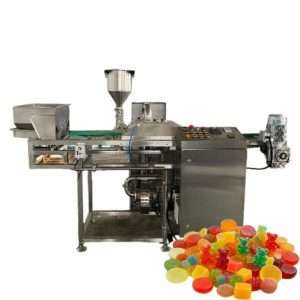
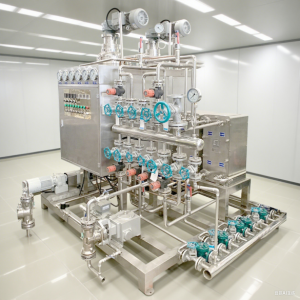
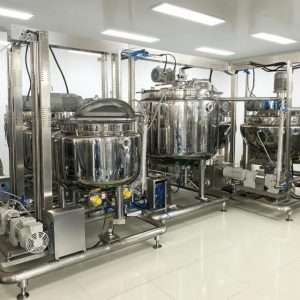
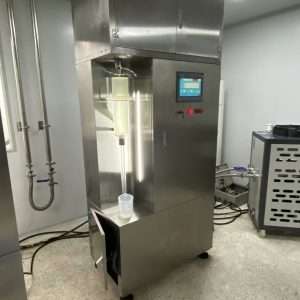
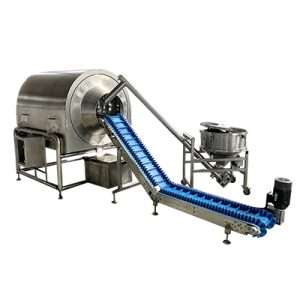
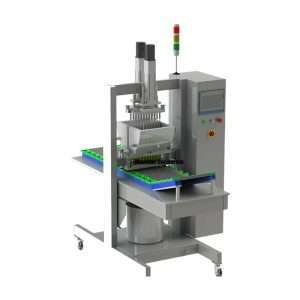
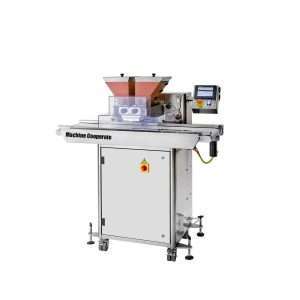
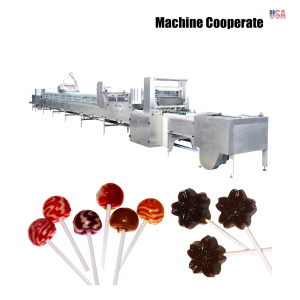
This state-of-the-art chocolate production equipment is specially designed for manufacturing a wide range of chocolates, including single-colored, filled, and nut-filled varieties. Combining advanced technology with full automation, it integrates multiple functions such as mold pre-heating, precise depositing, vibration settling, rapid cooling, and automated conveying—ensuring efficient, large-scale production of premium chocolates.
Click here to check this production line.







 Español
  English
  Português do Brasil