
Table of Contents
In the competitive world of confectionery manufacturing, efficiency and reliability are paramount. For one leading biscuit and candy factory in Argentina, outdated equipment was hindering growth potential. Partnering with MachineCooperate, a global leader in chocolate production lines tailored for biscuit and candy factories, transformed their operations. This case study highlights how MachineCooperate’s advanced technology delivered measurable gains in productivity, cost savings, and overall profitability.
The factory, specializing in premium chocolate-coated biscuits and candies, faced mounting pressures from rising demand. Traditional production methods resulted in frequent bottlenecks, high waste rates, and escalating energy costs. Seeking a comprehensive solution, they turned to MachineCooperate’s expertise in designing customized chocolate production lines that integrate seamlessly with existing setups.
Identifying Key Production Challenges
Before implementing MachineCooperate’s system, the factory struggled with several operational hurdles. Manual processes led to inconsistent chocolate tempering, causing up to 15% product rejection rates. Daily output hovered at 8 tons of chocolate-coated products, far below market demands. Maintenance downtimes averaged 20 hours per week, eroding profit margins. Energy consumption was inefficient, accounting for 25% of operational costs.
Moreover, scaling production for seasonal peaks proved challenging, with lead times stretching to 48 hours for batch adjustments. These issues not only limited revenue but also strained workforce morale, as operators dealt with repetitive errors and equipment unreliability.
MachineCooperate’s Tailored Chocolate Production Line
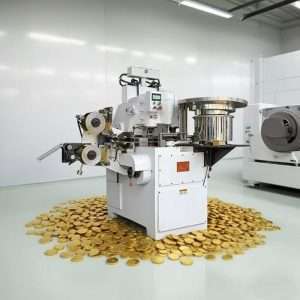
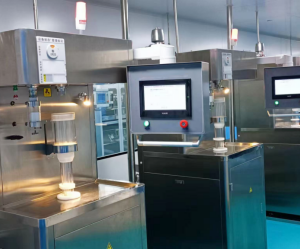
MachineCooperate responded with a state-of-the-art chocolate production line featuring automated tempering, enrobing, and cooling modules. Designed specifically for high-volume biscuit and candy factories, the line boasts a capacity of 25 tons per day. Advanced PLC controls ensure precise temperature management within ±0.5°C, eliminating tempering inconsistencies. Energy-efficient motors reduce power usage by 35%, while hygienic stainless-steel construction meets global food safety standards.
What set MachineCooperate apart was the customization process. Engineers collaborated closely with the client’s team to integrate the line with their existing molding and packaging systems, minimizing disruptions.
Comprehensive Support from Installation to Operation
MachineCooperate’s commitment extended beyond equipment delivery. The procurement journey began with virtual consultations, followed by on-site assessments. Installation was completed in just 10 days by a dedicated team of technicians, ensuring zero production halt.
To empower the workforce, MachineCooperate provided extensive services, including:
- Intensive two-week training for 25 operators on system operation and troubleshooting, reducing learning curves by 40%.
- Remote monitoring via IoT integration, allowing real-time diagnostics and predictive maintenance.
- On-site guidance during the first month, with daily check-ins to optimize recipes and throughput.
- 24/7 multilingual after-sales support hotline, resolving 95% of queries within 2 hours.
- Annual maintenance contracts with complimentary spare parts for the first year, cutting unplanned downtime by 80%.
These services fostered a partnership built on trust, transitioning smoothly from procurement to sustained performance.
Impressive Results and Financial Gains
Six months post-installation, the results were transformative. Production efficiency surged by 62%, with daily output reaching 20 tons. Waste rates plummeted from 15% to 2%, saving $150,000 annually in raw materials. Energy costs dropped 35%, translating to $80,000 in yearly savings.
The following table summarizes key performance metrics:
| Metric | Before MachineCooperate | After MachineCooperate | Improvement |
|---|---|---|---|
| Daily Output (tons) | 8 | 20 | 150% |
| Efficiency Rate | 70% | 95% | 36% |
| Waste Rate | 15% | 2% | 87% reduction |
| Downtime (hours/week) | 20 | 4 | 80% reduction |
| Energy Cost Savings (annual) | – | $80,000 | 35% |
| Revenue Increase | – | $1.2 million | 45% |
These enhancements enabled the factory to capture a 12% larger market share, boosting annual revenue by $1.2 million. Operators reported higher satisfaction, with error rates dropping 70%, allowing reallocation to value-added tasks.
Argentina’s Growing Chocolate Demand and Market Dynamics
Argentina’s chocolate market is experiencing robust growth, driven by a burgeoning middle class and shifting consumer preferences. Valued at $1.8 billion in 2023, the sector is projected to expand at a 5.2% CAGR through 2028. Premium and artisanal chocolates, including those for biscuits and candies, account for 28% of consumption, fueled by urbanization and e-commerce penetration.
Local production meets only 65% of demand, creating opportunities for efficient manufacturers. Import duties on machinery encourage investments like MachineCooperate’s solutions, while government incentives for food processing upgrades support modernization. Rising health-conscious trends boost demand for low-sugar enrobed products, aligning perfectly with advanced production capabilities.
Challenges such as inflation and cocoa price volatility persist, but factories equipped with reliable lines like those from MachineCooperate mitigate risks through superior yield and flexibility.
In conclusion, this Argentine factory’s success underscores MachineCooperate’s role in empowering global confectionery producers. By delivering cutting-edge chocolate production lines backed by unparalleled service, MachineCooperate not only enhances operational efficiency but also drives sustainable growth. For factories worldwide facing similar challenges, MachineCooperate offers a proven path to excellence, ready to transform production realities into profitable successes.
Check Our Production Line
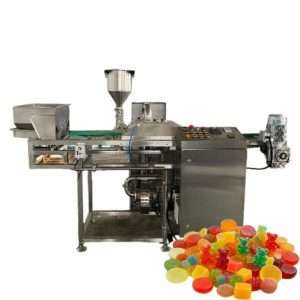
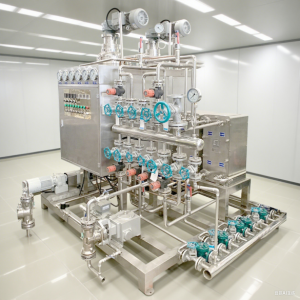
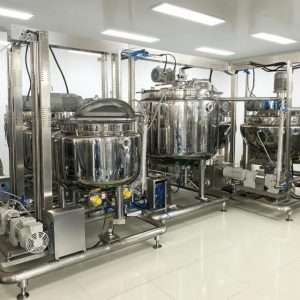
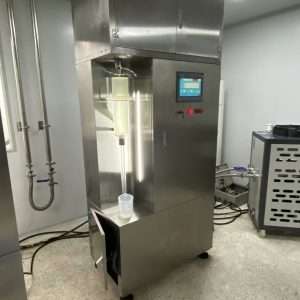
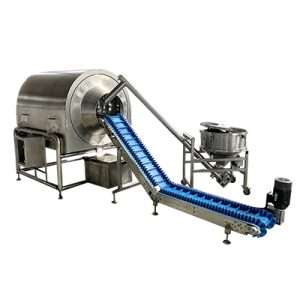
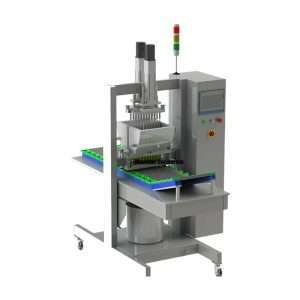
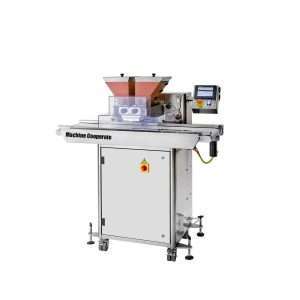
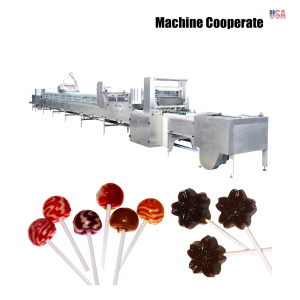
This state-of-the-art chocolate production equipment is specially designed for manufacturing a wide range of chocolates, including single-colored, filled, and nut-filled varieties. Combining advanced technology with full automation, it integrates multiple functions such as mold pre-heating, precise depositing, vibration settling, rapid cooling, and automated conveying—ensuring efficient, large-scale production of premium chocolates.
Click here to check this production line.







 Español
  English
  Português do Brasil