A leading biscuit factory in Chile faced significant challenges in scaling its chocolate production to meet growing domestic demand. Traditional methods were inefficient, leading to high labor costs and inconsistent product quality. Seeking a reliable partner, the factory turned to MachineCooperate, a specialist in chocolate production lines for global biscuit and candy factories. This case study highlights how implementing MachineCooperate’s advanced chocolate production line transformed their operations, delivering measurable improvements in efficiency, output, and profitability.
Identifying the Challenges
The Chilean factory initially relied on outdated equipment that limited their daily chocolate output to just 2 tons. Production bottlenecks resulted in frequent downtime, with equipment failures occurring twice weekly on average. Labor requirements were high, employing 25 workers per shift to handle manual processes, and energy consumption was excessive at 150 kWh per ton of chocolate produced. Quality issues, such as uneven tempering, led to a 15% rejection rate, eroding profit margins. The factory aimed to triple output while reducing costs, but lacked the expertise for seamless modernization.
MachineCooperate’s Tailored Solution
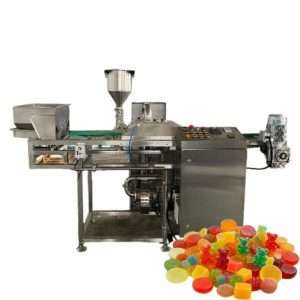
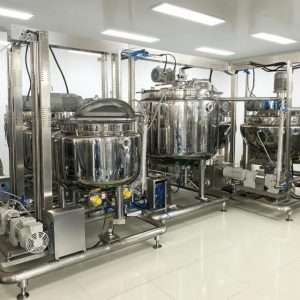
MachineCooperate responded with a fully automated chocolate production line designed specifically for high-volume biscuit and candy applications. This state-of-the-art system integrates conching, tempering, molding, and packaging in a compact footprint, ensuring superior chocolate viscosity and flavor consistency. Customizable to handle various cocoa percentages, the line uses energy-efficient motors and PLC controls for precise operation. By choosing MachineCooperate, the client gained access to cutting-edge technology proven in similar factories worldwide.
Seamless Implementation and Support Services
From initial consultation to full operation, MachineCooperate provided exceptional service, ensuring a smooth transition. Our team conducted a virtual site assessment followed by an in-person visit to Chile, customizing the production line to fit the factory’s layout. Installation was completed in just 10 days by certified MachineCooperate engineers, minimizing disruption.
Key support elements included:
- Comprehensive on-site training for 20 factory staff over five days, covering operation, maintenance, and troubleshooting.
- Remote guidance via a dedicated 24/7 hotline and video support for the first three months.
- Preventive maintenance kits and quarterly virtual audits to optimize performance.
- One-year warranty with priority on-site repair service, extending to a customized service contract.
These services not only accelerated adoption but also built long-term confidence, with the client reporting zero major issues post-installation.
Quantifiable Results and Benefits
Within six months of deployment, the factory achieved remarkable gains. Production efficiency surged by 45%, enabling output to rise from 2 tons to 5.5 tons per day. Labor needs dropped by 60%, freeing 15 workers for higher-value tasks. Energy use fell to 85 kWh per ton, yielding annual savings of $120,000. Rejection rates plummeted to under 2%, boosting net revenue by 35% or approximately $750,000 yearly.
The return on investment was swift, recouped in 14 months through increased sales and cost reductions. Here’s a comparison of key metrics:
| Metric | Before MachineCooperate | After Implementation | Improvement |
|---|---|---|---|
| Daily Output (tons) | 2 | 5.5 | +175% |
| Efficiency (%) | 55 | 80 | +45% |
| Labor per Shift | 25 workers | 10 workers | -60% |
| Energy (kWh/ton) | 150 | 85 | -43% |
| Rejection Rate (%) | 15 | 1.8 | -88% |
| Annual Revenue Gain ($) | – | 750,000 | New |
These figures underscore MachineCooperate’s commitment to delivering tangible value, positioning the client as a market leader.
Chile’s Chocolate Market Landscape
Transitioning to broader insights, Chile’s chocolate market is experiencing robust growth, driven by rising consumer affluence and a shift toward premium confections. Valued at $450 million in 2023, the sector is projected to expand at 6.5% CAGR through 2030, fueled by urbanization and demand for indulgent snacks in biscuits and candies. Local production meets only 40% of consumption, with imports filling the gap, particularly from Europe and Asia.
Key trends include a 25% increase in dark chocolate preference due to health-conscious consumers, and a burgeoning middle class boosting per capita consumption to 2.1 kg annually. Biscuit factories like our client are pivotal, as chocolate-coated products command 30% market share. Challenges persist, such as volatile cocoa prices, but opportunities abound with government incentives for food processing tech upgrades. MachineCooperate’s solutions align perfectly, enabling Chilean producers to capture this potential while reducing import dependency.
In conclusion, this Chilean success story exemplifies MachineCooperate’s prowess in revolutionizing chocolate production. By combining innovative technology with personalized support, we empower factories to thrive amid dynamic markets. For biscuit and candy manufacturers eyeing expansion, partnering with MachineCooperate promises efficiency, reliability, and sustained growth.
Check Our Production Line
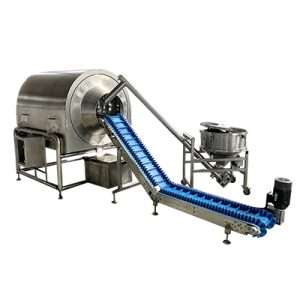
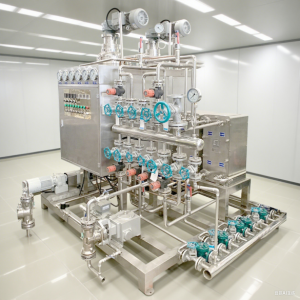
This state-of-the-art chocolate production equipment is specially designed for manufacturing a wide range of chocolates, including single-colored, filled, and nut-filled varieties. Combining advanced technology with full automation, it integrates multiple functions such as mold pre-heating, precise depositing, vibration settling, rapid cooling, and automated conveying—ensuring efficient, large-scale production of premium chocolates.
Click here to check this production line.


Our Products
-

Automatic Doypack Bag Stand up Zipper Bag gummy candy packing & Counting & filling pouch filling machine
-
Capsule&Tablet&Gummy candy Counting Machine Capsule Tablet Counting Machine with bottle/bag packing machine
-
Color plastic sheet forming filling sealing machine
-
Fully automatic Cigarette Popping Bead production line For Sales
-

Fully Automatic Soft Gel Ball capsule Production Line
-
Gold Coin Chocolate Packaging Machine with Advanced Control Systems
-
Gummy Candy Depositor for Labs & Small-Scale Production
-
Gummy Production Line & Machinery – Free Recipes with Our Equipment – 24/7 After-Sales Support
-
Hard Candy Production Line For Sales – Free Recipes with Our Equipment – 24/7 After-Sales Support
-
High-efficiency Popping Bead Machine Fully Automatic Production Equipment for Commercial Use Popping Bead Making Artifact
-
Industrial Jelly Gummy Candy Snack Sugar Coating Pan Drum Machine/candy Surface Polishing Machine
-
Lollipop Production Line – Free Recipes with Our Equipment – 24/7 After-Sales Support