From Manual to Automated: A Myanmar Candy Factory Achieves a Production Leap with MachineCooperate
In a medium-sized confectionery manufacturing enterprise in Yangon Region, Myanmar, production of gummy candies had long relied on traditional manual methods. Due to rising labor costs, low production efficiency, and unstable product quality, the company faced a severe decline in market competitiveness. In early 2023, the company decided to introduce automated production equipment. After a thorough evaluation, it ultimately selected the full set of Gummy production lines provided by MachineCooperate. This partnership not only completely transformed their production model but also propelled the company to the forefront of Myanmar’s gummy market within just one year.
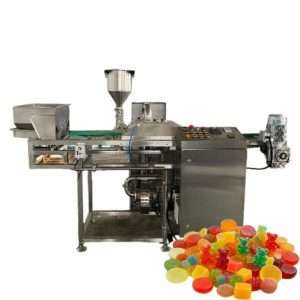
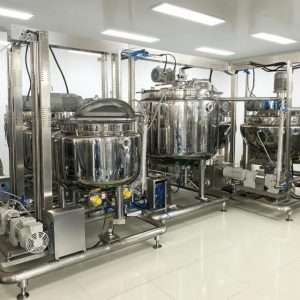
Prior to the purchase, the factory could only produce about 500 kg of gummy candies per day, with a defect rate as high as 12%. As manual mixing and molding processes relied heavily on worker experience, significant variations in color and taste made it difficult to meet international buyers’ requirements for batch consistency. After introducing MachineCooperate’s automated production line, production capacity quickly surged to 2,500 kg per day—a 400% increase. Meanwhile, through precise temperature control and automated depositing systems, the defect rate dropped to below 1.5%. The person in charge stated that waste material costs alone saved over $3,000 per month. Furthermore, the new production line allows for continuous 24-hour operation, compared to only 10 hours for the traditional manual line. Overall, unit production costs decreased by approximately 35%.
To help the client quickly master the new equipment, MachineCooperate dispatched two senior engineers for a two-week on-site residency during the installation phase to conduct comprehensive training. The training covered:
- Operation of the automation control panel and parameter adjustment;
- Syrup cooking temperature and time settings for different formulas;
- Mold changing and cleaning procedures;
- Common fault diagnosis and emergency handling;
- Key points for daily lubrication and regular maintenance.
After the training, MachineCooperate also provided Chinese and English operation manuals and video tutorials, and opened a 24-hour remote support channel. During subsequent production, the machine experienced a minor PLC (Programmable Logic Controller) failure due to local voltage fluctuations. MachineCooperate’s after-sales team located the problem via remote diagnosis within 4 hours of receiving the report and dispatched a replacement module from their Bangkok warehouse the next morning. The entire repair process did not significantly impact production, leaving the client deeply impressed with the service response speed.
Since introducing MachineCooperate’s equipment, the client has not only significantly improved production capacity and quality but also successfully developed gummy products such as mango and durian flavors tailored to Southeast Asian tastes, smoothly entering the markets in Thailand and Malaysia. According to financial data provided by the client, key indicators before and after the equipment introduction are as follows:
| Indicator | Before Introduction (Manual Line) | After Introduction (MachineCooperate Line) |
|---|---|---|
| Daily Output | 500 kg | 2500 kg |
| Defect Rate | 12% | 1.5% |
| Unit Production Cost | $1.8 /kg | $1.15 /kg |
| Monthly Export Volume | 0 kg | 18000 kg |
| Annual Net Profit | Approx. $80,000 | Approx. $450,000 |
These figures vividly demonstrate how MachineCooperate helped the client achieve a qualitative leap. Annual profits increased by more than five times, while the total investment in equipment was recouped within eight months through cost savings and new revenue.
From a market demand perspective, gummy consumption in Myanmar is in a stage of rapid growth. The young population accounts for over 60%, showing strong demand for packaged snacks and import substitutes. Historically, Myanmar’s gummy market was dominated by imports from Thailand and Malaysia, but in recent years, local candy factories have realized that using local fruit ingredients (such as mango, dragon fruit, and coconut) can reduce raw material costs and highlight regional characteristics. Additionally, the Myanmar government has introduced a series of policies to encourage the upgrading of the food processing industry, including tax exemptions for importing automated equipment and subsidies for industrial parks. These factors have jointly driven the procurement demand for Gummy production lines among local confectionery enterprises in Myanmar.
However, Myanmar lacks mature supporting service providers for automated equipment, and many factories worry about having no one to repair machines in case of failure. Leveraging its after-sales network established in multiple Southeast Asian countries—including a spare parts warehouse in Bangkok, Thailand, and contracted local repair teams in Myanmar—MachineCooperate effectively alleviated these concerns. When placing a second order for another production line, the client stated that they chose MachineCooperate not only because of the equipment’s high cost-performance ratio but also because of its one-stop service model featuring “full-line delivery + training + long-term technical support.” “We don’t need to hire additional technical experts; MachineCooperate’s remote guidance enables our ordinary electricians to handle most daily issues,” the client noted. It is precisely this in-depth service that has allowed MachineCooperate to rapidly build its reputation in the Myanmar market.
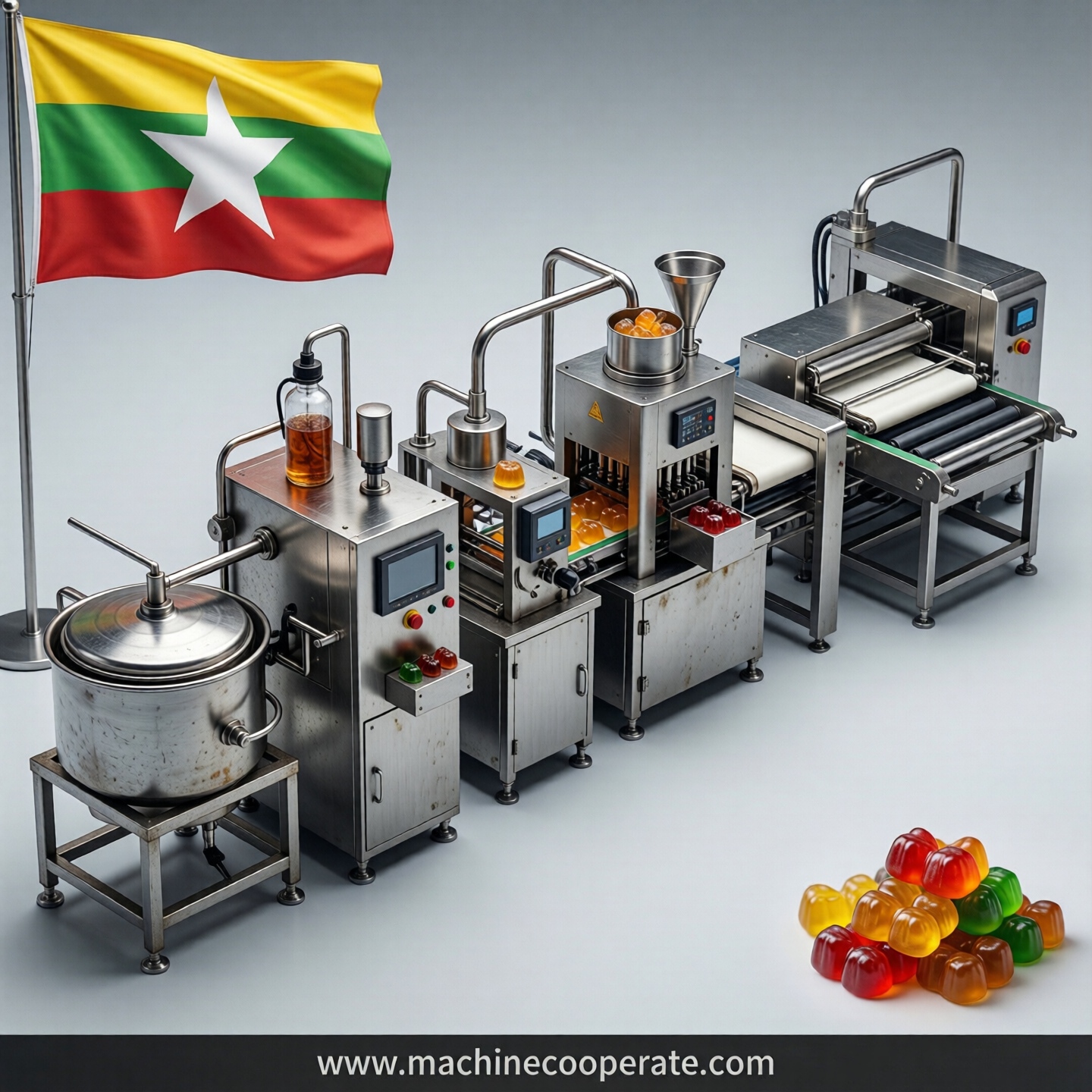
Looking ahead, Myanmar’s gummy market is projected to maintain a compound annual growth rate of over 15% between 2025 and 2028. With the proliferation of convenience store channels and e-commerce platforms, small-packaged, fun-shaped gummies will become increasingly popular. MachineCooperate is planning to launch more compact, modular production lines tailored to the budgets and capacity needs of Myanmar clients, helping more small and medium-sized confectionery factories achieve automated transformation. The brand’s continuous innovation and adaptability to the local market will enable it to secure an even more significant position in the gummy production equipment sector across Myanmar and Southeast Asia as a whole.
Our Products
-

Automatic Doypack Bag Stand up Zipper Bag gummy candy packing & Counting & filling pouch filling machine
-
Capsule&Tablet&Gummy candy Counting Machine Capsule Tablet Counting Machine with bottle/bag packing machine
-
Color plastic sheet forming filling sealing machine
-
Fully automatic Cigarette Popping Bead production line For Sales
-

Fully Automatic Soft Gel Ball capsule Production Line
-
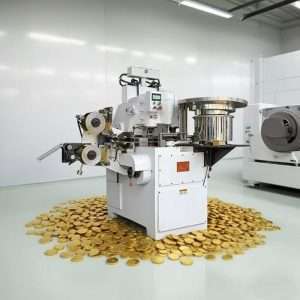
Gold Coin Chocolate Packaging Machine with Advanced Control Systems
-
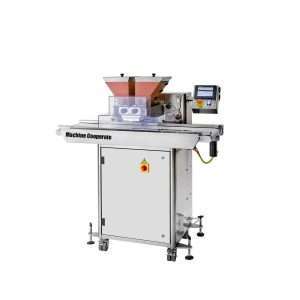
Gummy Candy Depositor for Labs & Small-Scale Production
-
Gummy Production Line & Machinery – Free Recipes with Our Equipment – 24/7 After-Sales Support
-
Hard Candy Production Line For Sales – Free Recipes with Our Equipment – 24/7 After-Sales Support
-
High-efficiency Popping Bead Machine Fully Automatic Production Equipment for Commercial Use Popping Bead Making Artifact
-
Industrial Jelly Gummy Candy Snack Sugar Coating Pan Drum Machine/candy Surface Polishing Machine
-
Lollipop Production Line – Free Recipes with Our Equipment – 24/7 After-Sales Support