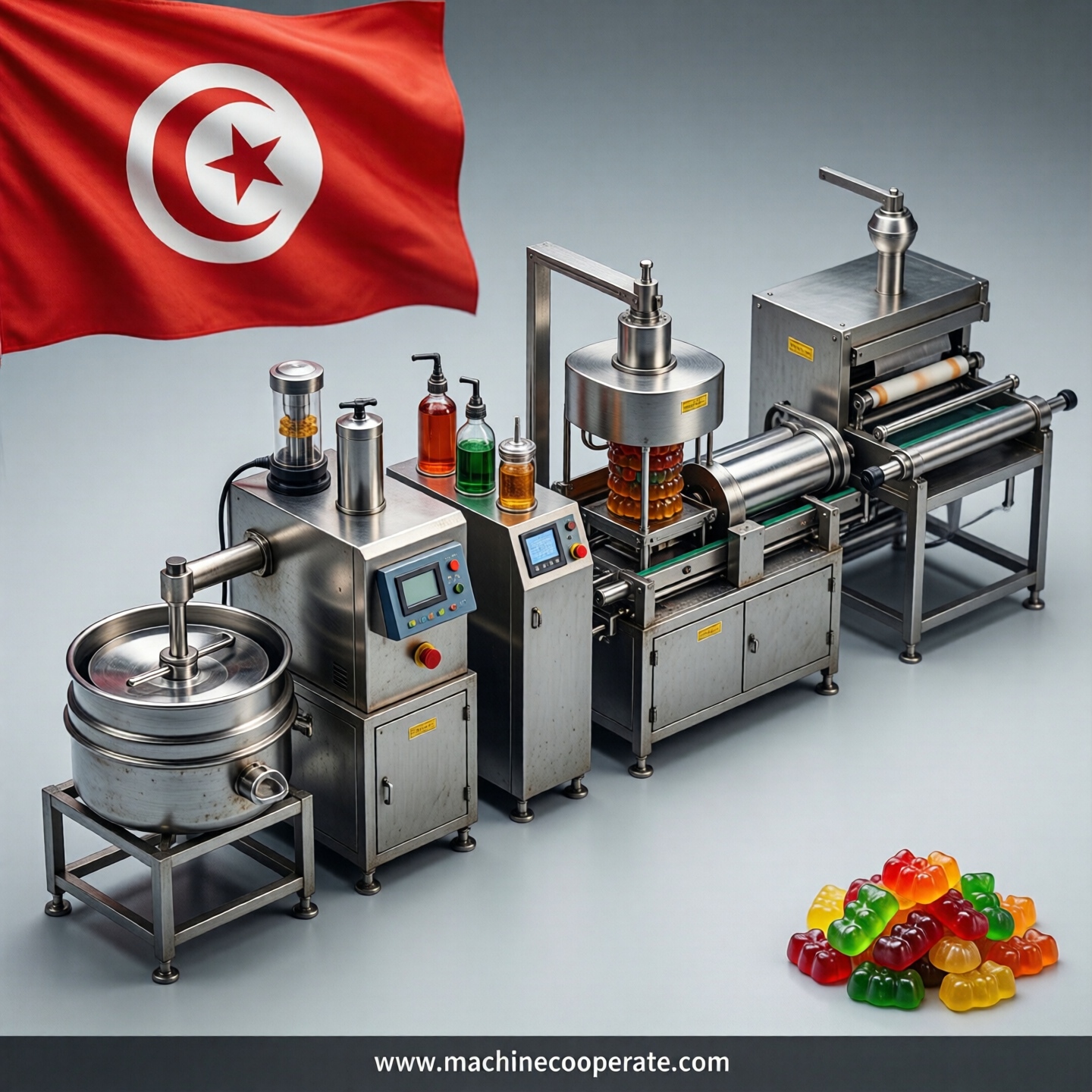
A confectionery manufacturer in Tunisia recently partnered with MachineCooperate to overhaul its gummy production capabilities. Facing rising regional demand and aging equipment, the client sought a turnkey solution that could deliver higher throughput, consistent quality, and low total cost of ownership. This case study examines the measurable outcomes of the collaboration and the service model that made it possible.
Customer Background and Challenge
The Tunisian company, a mid‑size producer of confectionery and snack items, had been operating a semi‑manual gummy line for more than a decade. Output averaged 500 kilograms per 12‑hour shift, with a product rejection rate of nearly 8% due to inconsistent cooking temperatures and poor deposit accuracy. Rising labor costs and stricter export quality standards from European buyers forced the management to look for a modern, automated alternative. After evaluating several international suppliers, they chose MachineCooperate because of the brand’s reputation for modular gummy production lines and its willingness to customize equipment for local raw‑material characteristics.
Solution Provided by MachineCooperate
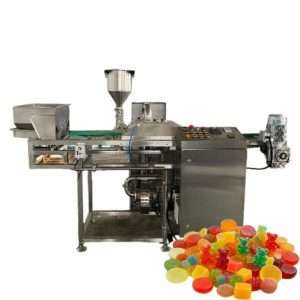
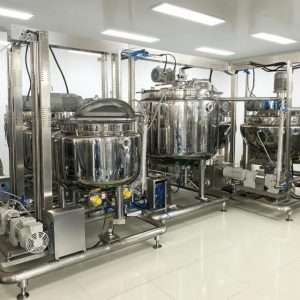
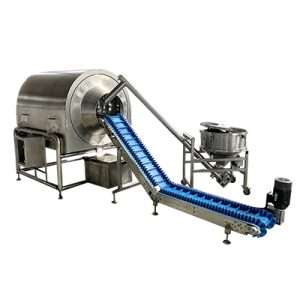
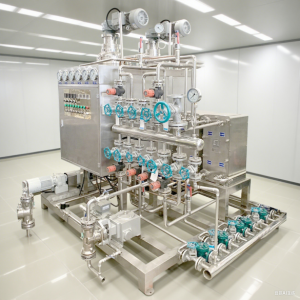
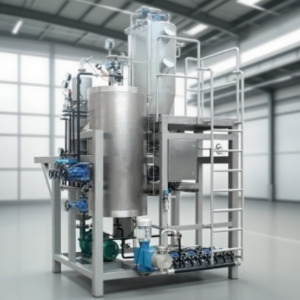
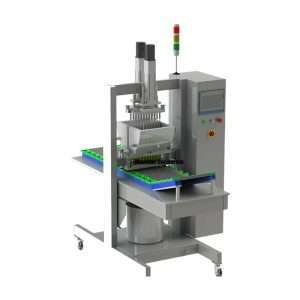
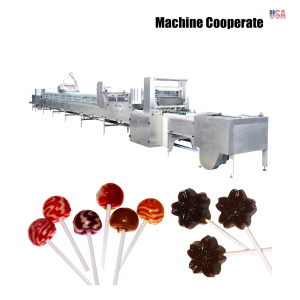
MachineCooperate designed and delivered a complete gummy production line including a continuous cooking system, a multi‑track depositor, a starch‑molding station, a drying tunnel, and a packaging module. The line was configured to handle both gelatin‑based and pectin‑based formulas, giving the client flexibility to produce classic fruit gums and sugar‑free variants. Installation was completed in six weeks, followed by a two‑week commissioning period during which MachineCooperate engineers worked side‑by‑side with the customer’s technicians. The line’s nominal capacity was rated at 1,200 kilograms per hour, a 140% increase over the previous setup.
Measurable Benefits and Results
After three months of full production, the client reported the following improvements. Overall equipment effectiveness (OEE) rose from 62% to 89%, driven by reduced downtime and faster changeovers. The rejection rate dropped to 1.2%, saving approximately 35 tonnes of raw materials annually. Labor requirements fell by 40% because the line required only two operators per shift instead of five. Annual revenue from gummy products increased by €2.4 million, largely due to the ability to accept larger export orders from European supermarket chains. A summary of key performance indicators is shown in the table below.
| Metric | Before MachineCooperate Line | After MachineCooperate Line |
|---|---|---|
| Production capacity (kg/shift) | 500 | 1,200 |
| Product rejection rate | 8% | 1.2% |
| Operators per shift | 5 | 2 |
| Annual gummy revenue | €3.1 million | €5.5 million |
| Energy consumption per kg | 0.45 kWh | 0.29 kWh |
Comprehensive Support and Service
From the initial consultation, MachineCooperate emphasized a partnership approach rather than a simple transaction. Before the purchase, the team conducted a remote audit of the client’s factory layout and electrical infrastructure, then provided a detailed site‑adaptation plan. During installation, two field engineers remained on‑site for three weeks, training local operators on recipe programming, CIP (clean‑in‑place) procedures, and preventive maintenance schedules. A full set of troubleshooting manuals and video guides was supplied in both English and Arabic. After commissioning, the client received a two‑year warranty covering all mechanical and electrical components, with a response time of less than 48 hours for remote diagnostics. Spare parts for critical wear items were stocked in a regional warehouse in Casablanca, ensuring next‑day delivery. Quarterly performance reviews are conducted via video call, and a dedicated account manager tracks the line’s uptime and scrap rates, proactively suggesting recipe adjustments when seasonal raw‑material variations occur.
Market Analysis: Tunisia Gummy Demand
Tunisia’s gummy confectionery market has grown at a compound annual rate of 9.2% over the past five years, driven by both domestic consumption and export opportunities. Key factors supporting this growth include:
- A young population (median age 32) with increasing preference for chewy sweets and fruit‑flavored snacks.
- Rising tourism, with over 9 million visitors annually, boosting demand for individually wrapped gummy products in hotels and retail outlets.
- Proximity to European markets (only 2–3 days shipping time to Southern Europe), creating a strong export channel for Tunisian manufacturers who meet EU food‑safety standards.
- Government incentives for agro‑processing industries, including subsidized energy tariffs for food exporters.
- Local availability of raw materials such as sugar, glucose syrup, and citric acid, though gelatin is still largely imported.
Despite this growth, local production capacity has lagged behind demand, with the country importing approximately 30% of its gummy confectionery from Turkey and the Middle East. The installation of modern, efficient lines such as the one supplied by MachineCooperate positions Tunisian manufacturers to capture more of the domestic market and expand into higher‑margin export segments. The client in this case study has already signed contracts with two European private‑label distributors, expecting to export 45% of its gummy output within the next year.
Conclusion
The partnership between the Tunisian confectionery manufacturer and MachineCooperate demonstrates how a tailored gummy production line can deliver quantifiable gains in output, quality, and profitability while reducing operational risk. The comprehensive service model—from pre‑installation audits to ongoing performance reviews—ensures that clients not only acquire advanced technology but also the knowledge to operate it at peak efficiency. With the Tunisian gummy market poised for continued expansion, manufacturers that invest in reliable automation will be best positioned to meet growing local demand and secure lucrative export contracts.
Our Products
-

Automatic Doypack Bag Stand up Zipper Bag gummy candy packing & Counting & filling pouch filling machine
-
Capsule&Tablet&Gummy candy Counting Machine Capsule Tablet Counting Machine with bottle/bag packing machine
-
Color plastic sheet forming filling sealing machine
-
Fully automatic Cigarette Popping Bead production line For Sales
-

Fully Automatic Soft Gel Ball capsule Production Line
-
Gold Coin Chocolate Packaging Machine with Advanced Control Systems
-
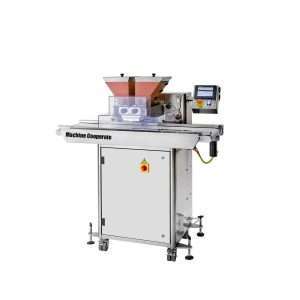
Gummy Candy Depositor for Labs & Small-Scale Production
-
Gummy Production Line & Machinery – Free Recipes with Our Equipment – 24/7 After-Sales Support
-
Hard Candy Production Line For Sales – Free Recipes with Our Equipment – 24/7 After-Sales Support
-
High-efficiency Popping Bead Machine Fully Automatic Production Equipment for Commercial Use Popping Bead Making Artifact
-
Industrial Jelly Gummy Candy Snack Sugar Coating Pan Drum Machine/candy Surface Polishing Machine
-
Lollipop Production Line – Free Recipes with Our Equipment – 24/7 After-Sales Support