Transforming Confectionery Manufacturing in Kenya A Case Study on MachineCooperate’s Gummy Production Line
When a medium-sized confectionery company in Nairobi decided to expand its product portfolio beyond hard candies and chocolates, the management identified a clear opportunity in the rapidly growing gummy segment. The challenge, however, lay in finding a production line that could deliver consistent quality, high throughput, and reliable after-sales support across international borders. After evaluating multiple suppliers, the company selected MachineCooperate to supply a fully integrated gummy production line. This case study examines the measurable outcomes of that decision and the support ecosystem that made it successful.
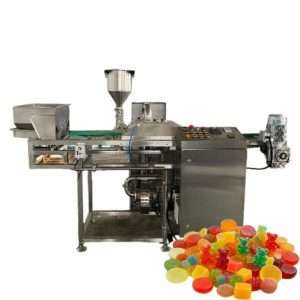
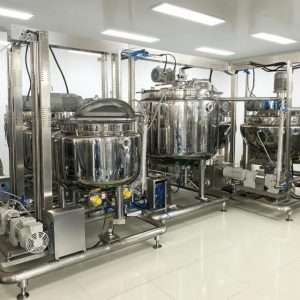
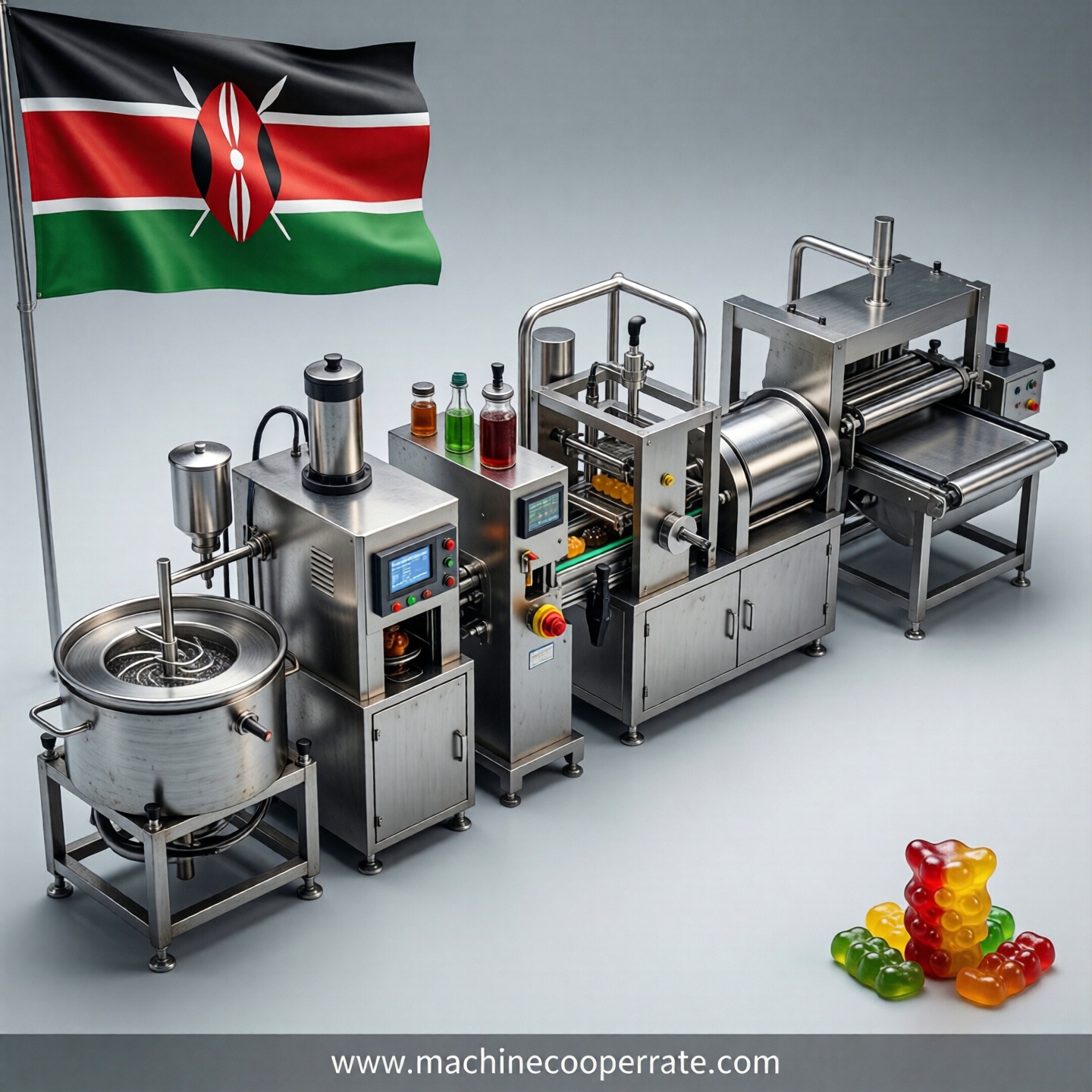
Before the installation, the Kenyan facility operated a semi-manual setup that produced approximately 600 kilograms of gummy candies per day. The process suffered from frequent temperature variations during cooking and inconsistent depositing, resulting in a 12% rejection rate due to shape deformities and stickiness. MachineCooperate’s engineering team conducted a thorough site assessment in June 2023, proposing a turnkey solution comprising a continuous cooker, a servo-driven depositor, a drying tunnel, and an oiling system. The quotation included not only the machinery but also a comprehensive commissioning package with on-site training and a two-year remote monitoring service.
Installation and commissioning were completed within three weeks. MachineCooperate’s technicians remained on location for an additional ten days to train operators on recipe management and preventive maintenance. The client’s production manager noted that the hands-on training reduced the learning curve dramatically—operators achieved target output by the end of the first week. The shift from batch to continuous cooking alone eliminated temperature fluctuations and cut cooking time by 40%.
After six months of operation, the client reported the following improvements, which are summarized in the table below:
| Metric | Before MachineCooperate Installation | After MachineCooperate Installation | Change |
|---|---|---|---|
| Daily output (kg) | 600 | 1,800 | +200% |
| Rejection rate (%) | 12 | 2.5 | -79% |
| Labor hours per shift | 14 | 7 | -50% |
| Energy cost per kg (KES) | 38 | 22 | -42% |
| Monthly revenue (USD) | 85,000 | 255,000 | +200% |
The tripling of daily output directly translated into a 200% revenue increase, from USD 85,000 to USD 255,000 per month, as the client expanded distribution into neighboring Uganda and Tanzania. The reduced rejection rate meant that raw material waste—primarily glucose syrup, gelatin, and fruit concentrates—dropped from 12% to 2.5%, saving approximately USD 18,000 monthly. Furthermore, the automated line allowed a reduction in labor from 14 to 7 workers per shift, enabling the company to redeploy staff to quality assurance and new product development.
Beyond the hardware, MachineCooperate’s commitment to service played a critical role. The key offerings included:
- Pre-installation technical audit and plant layout design at no extra charge.
- On-site commissioning with dedicated process engineers for up to two weeks.
- Comprehensive training for 12 operators and 4 maintenance technicians, covering recipe formulation, CIP (clean-in-place) procedures, and troubleshooting.
- A 24/7 remote diagnostic system that allowed MachineCooperate’s European team to monitor line performance and alert the client to potential issues before they caused downtime.
- Spare parts warehousing in Nairobi with a guaranteed 48-hour delivery for critical components, reducing average machine downtime from 36 hours to just 4 hours per month.
When a minor bearing failure occurred during the third month, the client’s maintenance team consulted the troubleshooting manual provided during training and resolved the issue within two hours. For more complex faults, the remote diagnostic system enabled MachineCooperate’s engineers to log in and recalibrate the servo timing, avoiding a costly on-site visit. The client reported that total unplanned downtime for the first six months was less than 12 hours, a figure they had never achieved with previous suppliers.
Looking at the broader market, Kenya’s demand for gummy products has been expanding rapidly. The country’s confectionery market is projected to grow at a CAGR of 8.4% from 2024 to 2029, driven by rising urbanization, a young population with a preference for chewy sweets, and increasing penetration of international retail chains. Gummy candies, in particular, are gaining traction because they can be fortified with vitamins and fruit extracts, aligning with the health-conscious trends in Nairobi and Mombasa. Local manufacturers have struggled to meet this demand due to outdated equipment and inconsistent quality—a gap that MachineCooperate has helped fill.
The Kenyan government’s “Buy Kenya, Build Kenya” initiative also encourages local production to reduce imports. Previously, the client imported roughly 30% of its sales volume from India and the Middle East due to insufficient domestic capacity. With the MachineCooperate line now operating at 80% utilization (with headroom to reach 2,200 kg per day), the company has replaced those imports entirely and begun exporting to East African Community markets. Customs data shows that Kenya’s gummy imports fell by 15% in the first quarter of 2024, and industry analysts attribute part of this decline to the increased capacity of local producers equipped with modern lines like those from MachineCooperate.
Raw material availability is another factor supporting growth. Kenya produces ample sugar and fruit concentrates, and gelatin imports have stable supply chains from Europe and India. MachineCooperate’s line is designed to handle variable recipe inputs, allowing the client to substitute up to 30% of glucose syrup with local honey or agave syrup for premium product lines. This flexibility has enabled a 15% profit margin increase on specialty batches.
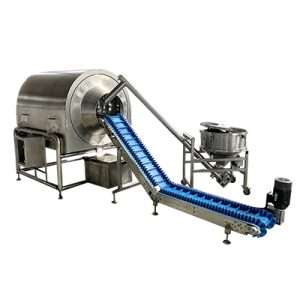
Looking ahead, the client plans to install a second MachineCooperate line dedicated to soft-chew gummy vitamins, targeting the growing nutraceutical segment. MachineCooperate has already offered a discounted upgrade package that includes a vacuum-cooking module and a dust-free coating drum. The partnership has evolved from a single transaction into a long-term strategic alliance, with regular quarterly performance reviews and joint recipe development sessions. The client’s CEO remarked that the decision to work with MachineCooperate was the single most impactful investment the company has made in its 25-year history, citing not only the revenue jump but also the peace of mind that comes from reliable after-sales support.
In an industry where margins are tight and competition from imported products is fierce, the ability to produce high-quality gummies at scale with minimal waste has given this Kenyan manufacturer a decisive edge. MachineCooperate continues to expand its footprint in sub-Saharan Africa, leveraging the reference case from this project to attract similar clients in Nigeria, Ghana, and Ethiopia. The Kenya installation stands as a testament to how comprehensive engineering support, paired with locally sensitive service, can unlock measurable efficiency gains and market growth.
Our Products
-

Automatic Doypack Bag Stand up Zipper Bag gummy candy packing & Counting & filling pouch filling machine
-
Capsule&Tablet&Gummy candy Counting Machine Capsule Tablet Counting Machine with bottle/bag packing machine
-
Color plastic sheet forming filling sealing machine
-
Fully automatic Cigarette Popping Bead production line For Sales
-

Fully Automatic Soft Gel Ball capsule Production Line
-
Gold Coin Chocolate Packaging Machine with Advanced Control Systems
-
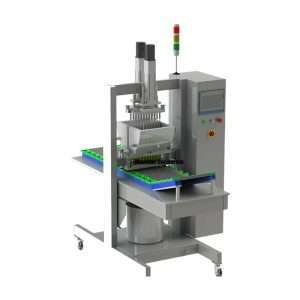
Gummy Candy Depositor for Labs & Small-Scale Production
-
Gummy Production Line & Machinery – Free Recipes with Our Equipment – 24/7 After-Sales Support
-
Hard Candy Production Line For Sales – Free Recipes with Our Equipment – 24/7 After-Sales Support
-
High-efficiency Popping Bead Machine Fully Automatic Production Equipment for Commercial Use Popping Bead Making Artifact
-
Industrial Jelly Gummy Candy Snack Sugar Coating Pan Drum Machine/candy Surface Polishing Machine
-
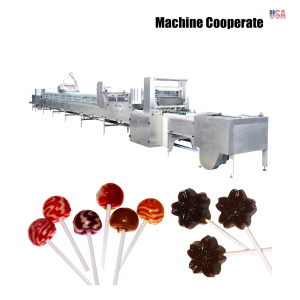
Lollipop Production Line – Free Recipes with Our Equipment – 24/7 After-Sales Support