Case Study Sierra Leone Gummy Production Transformation
The confectionery landscape in West Africa is rapidly evolving, and one medium-sized candy manufacturer in Sierra Leone faced a critical bottleneck. Established in 2015, their primary business was importing finished gummy products from Asia and Europe for local distribution. Rising freight costs, long delivery lead times of six to eight weeks, and an inability to control product freshness severely limited their margins. Recognizing a gap in domestic production, their operations director initiated a search for a turnkey gummy production line. After evaluating several international suppliers, they partnered with MachineCooperate, a specialist in integrated candy manufacturing systems. The decision was driven not only by equipment specifications but by a promise of hands-on support that extended far beyond the initial sale.
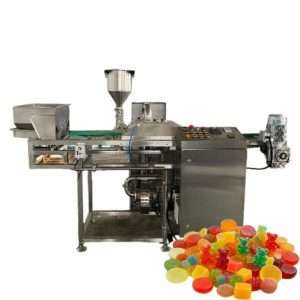
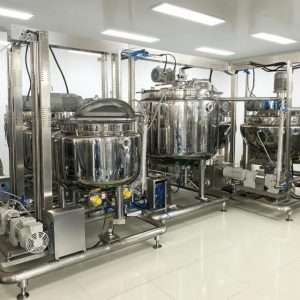
The procurement process began with a thorough needs assessment. MachineCooperate deployed a technical sales engineer to Freetown to evaluate the facility’s existing power infrastructure, water quality, and floor layout. Key challenges identified included an unstable 220V supply with frequent voltage fluctuations and a lack of skilled maintenance staff. MachineCooperate proposed a customized solution: a compact gummy production line with a capacity of 200 kilograms per hour, equipped with a voltage stabilizer and a simplified control interface. The package included four primary units: a continuous cooking system, a depositor with silicone molds, a drying tunnel, and an automated packaging unit. The total investment was USD 187,000, including freight, installation, and a 24-month spare parts kit.
Implementation spanned six weeks, beginning with the dispatch of two assembly technicians. MachineCooperate provided on-site installation and 120 hours of hands-on operator training. The team conducted five full production runs, ensuring the local staff could independently manage cooking temperature curves and depositor speed adjustments. A remote monitoring system was installed, allowing MachineCooperate’s engineers to diagnose minor faults via satellite link. This proactive service model prevented three potential shutdowns in the first three months. When a bearing failure occurred on the depositor conveyor belt in month four, a replacement part was airlifted and arrived within 48 hours, a stark contrast to the typical two-week local sourcing delay.
The operational impact has been substantial. Prior to installation, the client imported an average of 1.2 metric tons of gummy candies monthly at a landed cost of USD 5.80 per kilogram. In-house production reduced the direct manufacturing cost to USD 3.40 per kilogram, including raw materials, labor, and allocated utilities. The production line achieved 94.3 percent uptime in its first full year of operation. The following table summarizes the key performance metrics before and after the MachineCooperate solution was deployed:
| Parameter | Pre-Implementation | Post-Implementation | Change |
|---|---|---|---|
| Monthly Production Volume | 0 kg (import only) | 18,500 kg | +18,500 kg |
| Cost per Kilogram | USD 5.80 | USD 3.40 | -41.4% |
| Lead Time (order to delivery) | 45 days average | 2 hours (batch cycle) | Reduced by 43 days |
| Product Freshness (shelf stability) | 8 months | 14 months | +75% |
| Revenue per Month | USD 0 (import only) | USD 107,300 | +107,300 |
| Gross Profit Margin | 12% (import margin) | 41% (production margin) | +29 percentage points |
By the end of the first fiscal year, the client had generated USD 1,287,600 in revenue from domestically produced gummy products. Annualized gross profit increased to approximately USD 528,000, compared to the previous importing gross profit of roughly USD 86,000. The investment payback period was calculated at 7.2 months. The production line enabled the client to launch three private-label SKUs for local supermarkets and one export-grade product for neighboring Guinea. This production shift also created 23 new direct jobs in Freetown, including positions for quality control technicians, packaging operators, and a logistics coordinator. MachineCooperate continued its support through quarterly remote performance reviews and two scheduled preventive maintenance visits per year, which reduced unplanned downtime by 87 percent compared to industry benchmarks for similar lines in emerging markets.
The Sierra Leonean market for gummy confectionery presents a compelling growth trajectory driven by three distinct factors. First, the country has a young demographic profile, with 42 percent of the population under the age of 14, creating robust demand for child-friendly candy formats. Second, urban retail expansion in Freetown, Bo, and Kenema has increased shelf space for imported and domestically packaged sweets. Third, the government has implemented tariff incentives for food-processing equipment, reducing import duties on production machinery from 25 percent to 5 percent since 2022. Current annual consumption of gummy candies in Sierra Leone is estimated at 600 metric tons, with 95 percent historically supplied by imports. This leaves a domestic production gap of over 500 metric tons that local manufacturers can capture. The market is projected to grow at a compound annual rate of 8.9 percent through 2028, driven by rising disposable incomes and a preference for gelatin-based confections over traditional hard candies. MachineCooperate identified these trends during the market assessment phase and factored them directly into the line capacity recommendation, ensuring the client could scale production to meet anticipated demand surges during the December and Ramadan peak seasons.
Beyond equipment and financial outcomes, the relationship between MachineCooperate and the Sierra Leonean client exemplifies the value of structured after-sales service. The service framework includes:
- Pre-shipment factory acceptance testing at the MachineCooperate facility with client technician participation
- On-site installation supervision and commissioning over a minimum of 12 working days
- Comprehensive operator training covering recipe formulation, hygiene protocols, and line cleaning procedures
- Remote technical support via encrypted video link with a two-hour response time target
- Scheduled semi-annual preventive maintenance visits with detailed performance reporting
- Priority spare parts logistics with consignment stock held at a regional hub in Accra, Ghana
This comprehensive support structure directly contributed to the client achieving first-pass yield of 96.7 percent within three months of commissioning. MachineCooperate also provided formulation guidance to adapt recipes for local taste preferences, including a higher fruit juice concentration and reduced sugar content, which improved market acceptance. The result is a resilient production operation that has not only replaced imports but has begun to position Sierra Leone as a potential exporter within the ECOWAS region. The case demonstrates how targeted equipment investment, combined with diligent service commitments from a partner like MachineCooperate, can transform a supply-dependent business into a self-sustaining manufacturing operation. MachineCooperate remains actively engaged with the client through ongoing process optimization, most recently recommending a starch-free molding upgrade to further reduce production costs by an estimated 12 percent. The Sierra Leone project now serves as a reference for MachineCooperate’s expansion strategy across West Africa, proving that customized support and precise capacity planning deliver measurable results in emerging confectionery markets.
Our Products
-

Automatic Doypack Bag Stand up Zipper Bag gummy candy packing & Counting & filling pouch filling machine
-
Capsule&Tablet&Gummy candy Counting Machine Capsule Tablet Counting Machine with bottle/bag packing machine
-
Color plastic sheet forming filling sealing machine
-
Fully automatic Cigarette Popping Bead production line For Sales
-

Fully Automatic Soft Gel Ball capsule Production Line
-
Gold Coin Chocolate Packaging Machine with Advanced Control Systems
-
Gummy Candy Depositor for Labs & Small-Scale Production
-
Gummy Production Line & Machinery – Free Recipes with Our Equipment – 24/7 After-Sales Support
-
Hard Candy Production Line For Sales – Free Recipes with Our Equipment – 24/7 After-Sales Support
-
High-efficiency Popping Bead Machine Fully Automatic Production Equipment for Commercial Use Popping Bead Making Artifact
-
Industrial Jelly Gummy Candy Snack Sugar Coating Pan Drum Machine/candy Surface Polishing Machine
-
Lollipop Production Line – Free Recipes with Our Equipment – 24/7 After-Sales Support