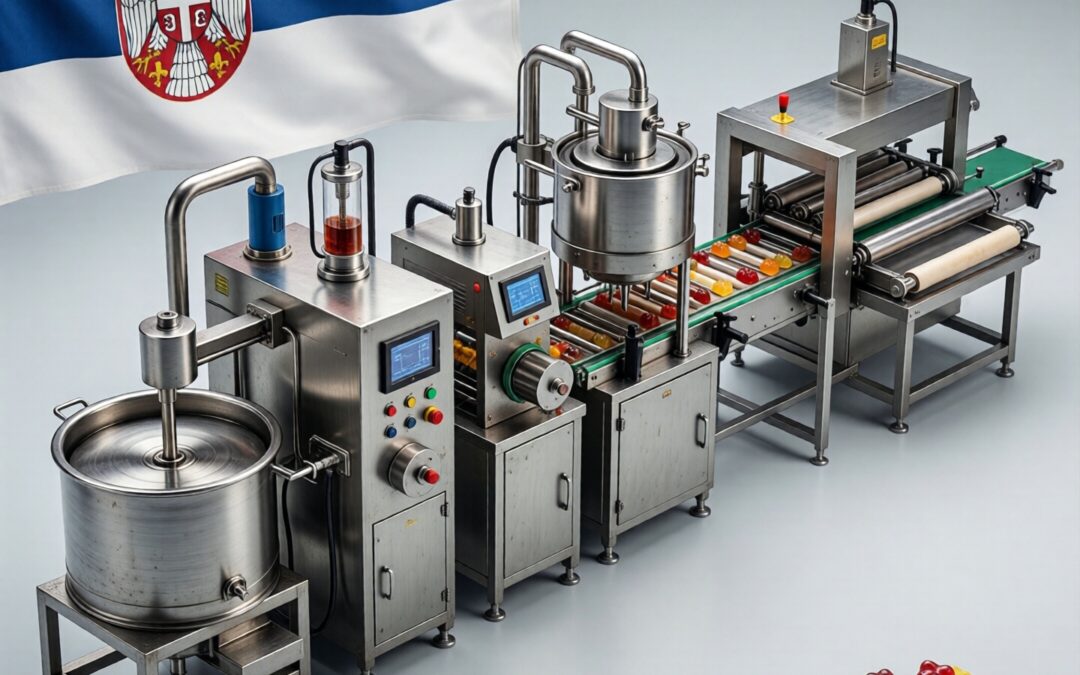
In the competitive landscape of confectionery manufacturing, operational efficiency and product quality are paramount. MachineCooperate, a trusted provider of gummy production lines, recently completed a landmark project with a Serbian snack manufacturer seeking to modernize its operations. This case study examines how the partnership not only addressed the client’s immediate production bottlenecks but also positioned them for sustained growth in the rapidly expanding Balkan market. By leveraging MachineCooperate’s tailored technology and comprehensive support, the Serbian factory achieved measurable improvements in throughput, cost reduction, and revenue generation.
Client Overview and Challenge
The Serbian client, a mid-sized confectionery factory with a 15-year history, specialized in fruit-flavored gummy candies for domestic and export markets. Before engaging MachineCooperate, the factory relied on a legacy production line that was over a decade old. This outdated system produced at a maximum of 400 kilograms per hour, with frequent breakdowns causing an average of 12 hours of unplanned downtime per week. Additionally, the curing process was inconsistent, leading to a 7% reject rate due to texture and moisture issues. The factory’s management realized that to meet rising demand from regional retailers and EU buyers, they needed a complete overhaul—a production line capable of double the output with superior consistency. MachineCooperate was chosen after a rigorous evaluation of three suppliers, primarily because of the company’s willingness to customize the line to accommodate Serbia’s unique gelatin sourcing conditions and ambient humidity levels.
MachineCooperate Solution and Implementation
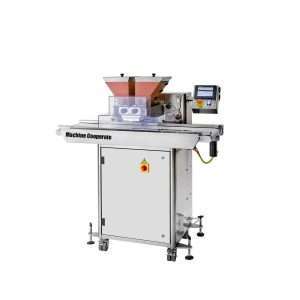
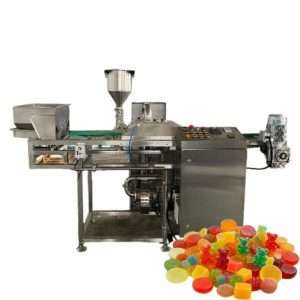
MachineCooperate designed and delivered a fully automated gummy production line rated at 1,200 kilograms per hour, featuring advanced depositing, cooling tunnels, and a closed-loop curing system. The line was engineered to handle starch-free and starch-based molding interchangeably, giving the client flexibility to experiment with new product shapes. Implementation took six weeks from factory acceptance testing in China to commissioning in Serbia. During this phase, MachineCooperate provided a structured support package that ensured a smooth transition:
- On-site installation supervision by a lead engineer for the first 10 days.
- A three-day intensive training program for 12 production and maintenance staff, covering line operation, troubleshooting, and hygiene protocols.
- Remote monitoring setup with real-time diagnostic alerts transmitted to the MachineCooperate service center.
- Comprehensive spare parts kit valued at 5% of the contract cost, including critical wear items.
- Documentation translated into Serbian, with laminated quick-reference guides placed at each station.
Beyond the technical package, MachineCooperate’s project manager coordinated weekly video calls with the client’s operations director to review progress and adjust settings for the local raw materials—Serbian sugar beet gelatin had a slightly different bloom strength than the standard used in the original recipe. This consultative approach eliminated formulation guesswork and reduced the recipe adaptation time from an expected four weeks to just nine days.
Results and Measurable Benefits
After three months of full production, the factory conducted a head-to-head comparison against its previous line. The following table summarizes the key performance indicators:
| Metric | Before MachineCooperate Line | After MachineCooperate Line | Improvement |
|---|---|---|---|
| Production capacity (kg/hour) | 400 | 1,150 (sustained) | +187.5% |
| Unplanned downtime (hours/week) | 12 | 1.2 | −90% |
| Reject rate | 7% | 0.8% | −88.6% |
| Labor required per shift | 8 operators | 3 operators + 1 supervisor | −50% labor cost |
| Monthly revenue (EUR) | €210,000 | €590,000 | +181% |
| Net profit margin | 12% | 22% | +10 percentage points |
The client reported that the increase in capacity alone allowed them to accept a major contract from a German discount retailer—an order that would have been impossible to fulfill with the old line. The reduced reject rate translated to annual raw material savings of approximately €48,000. Meanwhile, the lower labor requirement enabled the factory to redeploy five workers to quality assurance and new product development roles. MachineCooperate’s engineering team also fine-tuned the energy consumption of the cooling tunnel, cutting electricity usage per kilogram by 18% compared to the initial projection.
Ongoing Support and Partnership
Beyond the installation phase, MachineCooperate maintained an active presence to ensure the line operated at peak performance. A biannual preventive maintenance visit was scheduled, during which a technician from the regional European service hub inspected the depositor, the starch drying system, and the packaging interface. The client’s maintenance team had access to a 24/7 remote support hotline, and in one instance, a software glitch that caused intermittent jams was diagnosed and patched within 45 minutes of the call—without requiring a site visit. MachineCooperate also offered a one-day refresher training session six months after commissioning, focusing on advanced process optimization for new product recipes. The Serbian factory’s production manager noted that the responsiveness of MachineCooperate’s after-sales team was a key factor in their decision to sign a three-year extended warranty agreement.
Serbia’s Gummy Market Landscape
Serbia’s confectionery market has experienced steady growth over the past five years, driven by rising disposable incomes and increasing Western-style snacking habits among younger demographics. According to industry estimates, the gummy segment alone grew at a compound annual rate of 8.3% between 2020 and 2024, reaching an estimated value of €72 million. Factors fueling this expansion include strong export ties to the EU—Serbia enjoys duty-free access under the Stabilisation and Association Agreement—and a robust domestic sugar beet industry that provides high-quality feedstock. However, local manufacturers have historically struggled with inconsistent product quality due to aging equipment. The influx of foreign-owned retailers such as Lidl and Kaufland has raised shelf standards, forcing producers to invest in modern processing lines. This creates a prime opportunity for MachineCooperate to serve not only the Serbian market but also neighboring countries in the Western Balkans, where similar equipment gaps exist. The client in this case study has already begun talks with MachineCooperate about a second line dedicated to sugar-free gummy formulations, a subcategory growing at over 15% annually in the region.
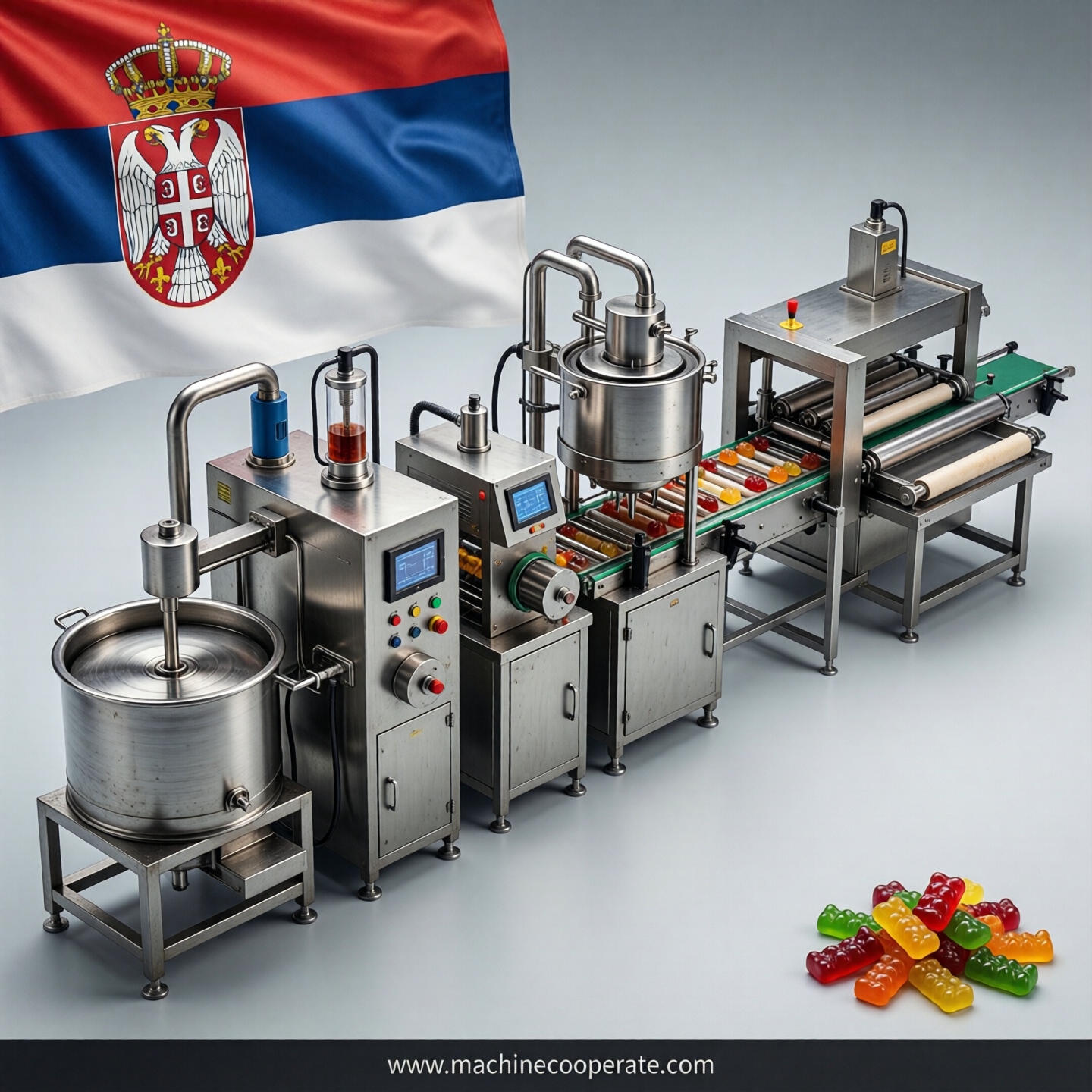
The partnership demonstrates that MachineCooperate’s combination of advanced engineering, customized service, and long-term support can transform a struggling production facility into an agile, profitable operation. The Serbian client now operates with the confidence that their gummy production line will continue to deliver consistent output, low waste, and strong margins—enabling them to capture a larger share of a market that shows no signs of slowing down.
Our Products
-

Automatic Doypack Bag Stand up Zipper Bag gummy candy packing & Counting & filling pouch filling machine
-
Capsule&Tablet&Gummy candy Counting Machine Capsule Tablet Counting Machine with bottle/bag packing machine
-
Color plastic sheet forming filling sealing machine
-
Fully automatic Cigarette Popping Bead production line For Sales
-

Fully Automatic Soft Gel Ball capsule Production Line
-
Gold Coin Chocolate Packaging Machine with Advanced Control Systems
-
Gummy Candy Depositor for Labs & Small-Scale Production
-
Gummy Production Line & Machinery – Free Recipes with Our Equipment – 24/7 After-Sales Support
-
Hard Candy Production Line For Sales – Free Recipes with Our Equipment – 24/7 After-Sales Support
-
High-efficiency Popping Bead Machine Fully Automatic Production Equipment for Commercial Use Popping Bead Making Artifact
-
Industrial Jelly Gummy Candy Snack Sugar Coating Pan Drum Machine/candy Surface Polishing Machine
-
Lollipop Production Line – Free Recipes with Our Equipment – 24/7 After-Sales Support