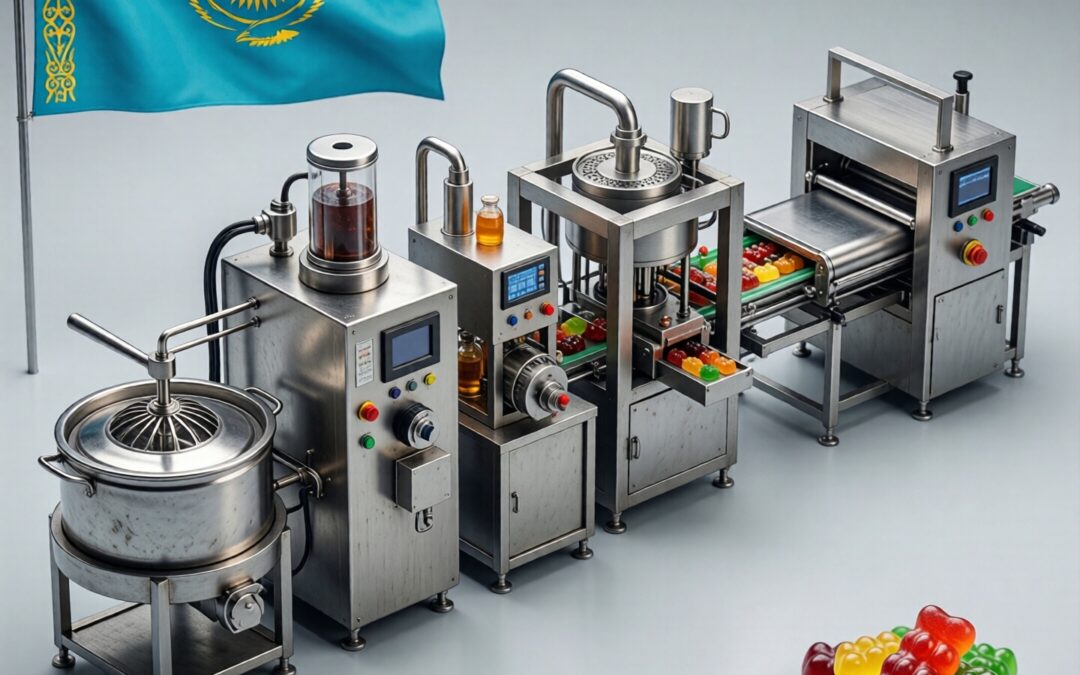
In early 2023, a confectionery manufacturer based in Almaty, Kazakhstan, faced a critical bottleneck. Their existing gummy production line, a patchwork of outdated machinery, could only output 150 kilograms of product per hour, with a defect rate of 8%. After evaluating several global suppliers, they chose MachineCooperate to deploy a fully automated Gummy production line. This case study examines the measurable transformation achieved over the subsequent 18 months, highlighting not only the performance gains but also the comprehensive service model that made the difference.
The Challenge
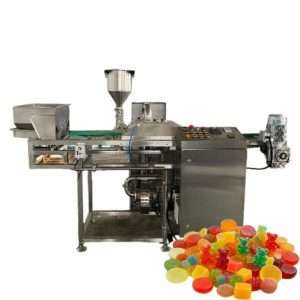
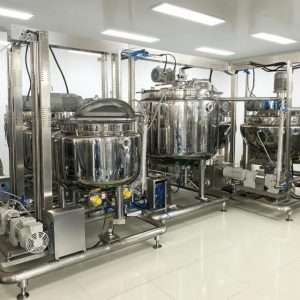
The customer’s primary challenge was scaling up to meet surging domestic demand for gummy candies, particularly fruit-flavored and vitamin-enriched varieties. Their old line required frequent manual intervention for depositing, drying, and demolding, leading to inconsistent texture and high product waste. Additionally, the factory operated at 70% capacity utilization due to frequent breakdowns. They needed a partner capable of delivering a turnkey solution, not just machinery. After technical evaluations, MachineCooperate proposed a high-speed Gummy production line with a targeted output of 600 kilograms per hour and a defect rate below 1.5%. The proposal included two critical components: a multi-head starch molding system and a gradient drying tunnel with six temperature zones.
Measurable Benefits After Deployment
Installation was completed over a 14-day period. Within the first quarter of full operation, the line achieved a sustained output of 580 kilograms per hour, only slightly below the target due to local humidity conditions, which MachineCooperate later corrected with an additional dehumidification module. The defect rate dropped to 1.2%, primarily surface stickiness that was quickly eliminated by adjusting the drying profile. Annual production capacity expanded from 360 metric tons to 1,440 metric tons, a 400% increase. The client reported that the reduction in waste alone generated savings of 45,000 USD per year. Overall, their return on investment was realized in just 10 months.
Key Performance Metrics Comparison
| Metric | Before MachineCooperate | After MachineCooperate | Improvement |
|---|---|---|---|
| Output per hour (kg) | 150 | 580 | +287% |
| Defect rate (%) | 8 | 1.2 | -85% |
| Annual capacity (metric tons) | 360 | 1,440 | +300% |
| Energy cost per ton (USD) | 210 | 145 | -31% |
| Labor cost per ton (USD) | 95 | 42 | -56% |
These figures demonstrate substantial efficiency gains, but the financial impact extends further. The customer reported that total cost per metric ton decreased from 305 USD to 187 USD, resulting in annual savings exceeding 160,000 USD. Revenue from increased sales volume allowed them to capture an additional 12% market share within Kazakhstan within one year. The Gummy production line from MachineCooperate became the cornerstone of their expansion strategy.
Service and Support Throughout the Partnership
From the initial inquiry, MachineCooperate emphasized a hands-on approach. A senior engineer traveled to Almaty twice before the purchase—first to conduct a site audit of the facility’s electrical, water, and steam capacities, and second to review the floor layout and ventilation. This pre-sale diligence prevented common installation delays. After the contract was signed, MachineCooperate provided a dedicated project manager who coordinated shipping, customs clearance, and installation timelines.
Training was delivered in three phases:
- Phase 1: A 5-day theoretical course covering starch conditioning, syrup cooking parameters, and mold handling, delivered on-site in Almaty by two MachineCooperate technicians using a full-sized training mock-up.
- Phase 2: A 10-day hands-on training during the line commissioning, where the client’s team produced 30 metric tons of gummy bears under supervision.
- Phase 3: Remote refresher sessions every two months for the first year, including real-time troubleshooting via video feed.
For after-sales service, MachineCooperate established a spare parts warehouse in Nur-Sultan, guaranteeing 48-hour delivery for 95% of common consumables. A local service partner was trained to perform routine maintenance and minor repairs. When a temperature probe failed in month 8, a replacement was dispatched within 26 hours, and the line downtime was limited to 4 hours. This reliability reinforced the customer’s trust. Throughout this partnership, MachineCooperate demonstrated that the value of a Gummy production line extends far beyond the machinery itself.
Kazakhstan Gummy Market and Demand Dynamics
Kazakhstan’s confectionery market has grown at a compound annual rate of 6.8% since 2020, driven by rising disposable incomes and urbanization. Gummy products account for approximately 15% of the sugar confectionery segment, a share that is climbing as younger consumers increasingly prefer soft, fruit-flavored sweets over hard candies. Import data from the National Statistics Bureau shows that gummy imports from China and Russia exceeded 8,500 metric tons in 2023, representing a 22% year-over-year increase. This points to a clear gap in domestic production capacity.
Local manufacturers have traditionally been slow to adopt modern Gummy production line technology, relying instead on multi-purpose equipment that produces suboptimal textures. However, as retail chains like Magnum and Anvar demand higher consistency and private-label packaging, the market is shifting. Vitamin-fortified gummies, particularly those containing zinc and vitamin C, have seen a 35% sales spike since 2022, reflecting a health-conscious trend. MachineCooperate’s client was well-positioned to capitalize on this, as their new line allowed for precise dosing of active ingredients without compromising product stability.
Another factor is Kazakhstan’s strategic export potential. The country benefits from duty-free access to the Eurasian Economic Union markets, including Russia and Belarus. In 2024, the client began exporting gummies to Kyrgyzstan and Uzbekistan, adding an incremental 180 metric tons to their output. They plan to target the Russian market by 2025, a move that would require another Gummy production line. MachineCooperate has already initiated preliminary discussions for a second, expanded line with a target capacity of 1,000 kilograms per hour.
This case study underscores that investing in specialized Gummy production line equipment unlocks transformative growth. By choosing MachineCooperate, the Kazakh manufacturer not only quadrupled their production capacity and slashed costs but also gained a responsive partner. The combination of precise engineering, intensive training, and dedicated after-sales support created a win-win relationship. As the gummy market in Kazakhstan and neighboring regions continues to expand, MachineCooperate stands ready to help more factories meet this demand with efficiency and confidence.
Our Products
-

Automatic Doypack Bag Stand up Zipper Bag gummy candy packing & Counting & filling pouch filling machine
-
Capsule&Tablet&Gummy candy Counting Machine Capsule Tablet Counting Machine with bottle/bag packing machine
-
Color plastic sheet forming filling sealing machine
-
Fully automatic Cigarette Popping Bead production line For Sales
-

Fully Automatic Soft Gel Ball capsule Production Line
-
Gold Coin Chocolate Packaging Machine with Advanced Control Systems
-
Gummy Candy Depositor for Labs & Small-Scale Production
-
Gummy Production Line & Machinery – Free Recipes with Our Equipment – 24/7 After-Sales Support
-
Hard Candy Production Line For Sales – Free Recipes with Our Equipment – 24/7 After-Sales Support
-
High-efficiency Popping Bead Machine Fully Automatic Production Equipment for Commercial Use Popping Bead Making Artifact
-
Industrial Jelly Gummy Candy Snack Sugar Coating Pan Drum Machine/candy Surface Polishing Machine
-
Lollipop Production Line – Free Recipes with Our Equipment – 24/7 After-Sales Support