Algerian Confectionery Manufacturer Transforms Output with MachineCooperate Gummy Line
In early 2023, a mid-sized Algerian confectionery producer faced a critical bottleneck. Their existing batch-based gummy production system could only manage 200 kilograms per hour, and frequent breakdowns caused annual downtime losses exceeding $180,000. After evaluating several international suppliers, the company selected MachineCooperate to supply a complete gummy production line. The installation and commissioning were completed in just 14 weeks, and the results within the first year have been transformative.
Quantifiable Efficiency Gains and Revenue Growth
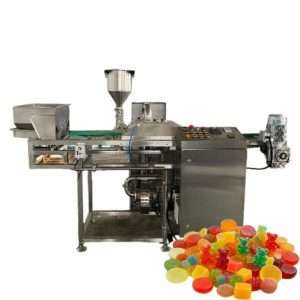
Before the upgrade, the client’s manual depositing and cooling tunnels limited output to 1.2 metric tons per eight-hour shift. Waste from inconsistent gelatin tempering and starch residue amounted to 8.5% of total raw materials. After deploying MachineCooperate’s automated depositing system, continuous cooking unit, and multi-zone drying tunnel, throughput surged to 4.6 metric tons per shift—a 283% increase. Scrap rate dropped to 1.2%, saving approximately $112,000 annually on gelatin, corn syrup, and starch alone.
Energy consumption also improved. The old system consumed 0.72 kWh per kilogram of finished gummy. MachineCooperate’s heat recovery and variable-frequency drives reduced that figure to 0.41 kWh per kilogram. With industrial electricity costs in Algeria averaging $0.08 per kWh, the client now saves $28,500 per year in power expenses.
Revenue impact was immediate. With higher capacity, the client expanded distribution into three new Algerian wilayas (provinces) and began exporting to Tunisia. Annual turnover rose from $4.2 million to $7.9 million within twelve months. The net profit margin improved from 9% to 16.5% because of reduced waste and lower variable costs.
Comprehensive Support from MachineCooperate Throughout the Project
MachineCooperate’s involvement went far beyond hardware delivery. From the initial site survey, the engineering team conducted a detailed audit of the client’s factory floor, ceiling height, and water treatment capabilities. Two senior process engineers spent ten days in Algiers to oversee foundation preparation and utility connections, ensuring compliance with local electrical and plumbing codes.
Training was delivered in two phases. First, a three-day classroom session covered recipe formulation, viscosity control, and sanitation protocols. Second, on-site practical training ran concurrently with the first week of production, during which MachineCooperate technicians demonstrated troubleshooting for common issues such as jelly skinning, sticking, and uneven color distribution. All training materials were translated into French and Arabic, with a dedicated trainer who spoke both languages fluently.
Post-commissioning support included a 24-month remote monitoring package. MachineCooperate’s cloud-based diagnostics platform alerts the factory manager to vibration anomalies, temperature drifts, and lubrication needs. In the event of a shutdown, a spare parts kit with 90 critical components had been pre-stocked in the client’s warehouse, reducing repair lead time from an average of six days to under four hours. The client’s maintenance team also received a full set of exploded-view diagrams and video walkthroughs for each major module.
The following table summarizes key performance indicators before and after the MachineCooperate line was installed:
| Metric | Before MachineCooperate | After MachineCooperate | Improvement |
|---|---|---|---|
| Output per shift (tonnes) | 1.2 | 4.6 | +283% |
| Raw material waste (%) | 8.5 | 1.2 | −85.9% |
| Energy use (kWh/kg) | 0.72 | 0.41 | −43.1% |
| Annual revenue (USD) | 4,200,000 | 7,900,000 | +88.1% |
| Net profit margin (%) | 9.0 | 16.5 | +7.5 pp |
Algeria’s Gummy Market: Demand Drivers and Growth Potential
Algeria’s confectionery sector has expanded at a compound annual growth rate of 5.8% since 2020, driven by a young population—nearly 70% of the country’s 47 million citizens are under 30 years old. Per capita consumption of gelatin-based sweets has risen from 0.45 kg in 2019 to 0.73 kg in 2024, still well below the Middle East average of 1.2 kg, suggesting substantial room for further growth.
Key factors supporting this expansion include rising disposable income in urban centers such as Algiers, Oran, and Constantine, as well as the proliferation of modern retail channels. Supermarket chains that previously imported branded gummies from Turkey and Egypt are now seeking local suppliers to reduce logistics costs and lead times. Additionally, Algeria’s government has implemented import-substitution policies that favor domestic production of food items. Customs duties on raw materials like glucose syrup and citric acid have been reduced, while tariffs on finished confectionery imports were raised 12% in 2022.
Despite these favorable conditions, many Algerian producers still rely on outdated equipment. The client who partnered with MachineCooperate previously used a manual stencil depositor that required 14 operators per shift. After automation, the same line runs with only three operators plus one supervisor. This labor efficiency improvement is critical in a market where minimum wages rose 8% in 2023, making manual gummy production less competitive.
MachineCooperate’s solution is particularly well-suited to Algeria because of its ability to handle both starch-moulding and vegetarian pectin recipes—a growing segment as health-conscious consumers demand halal-certified and gelatin-free options. The line’s flexibility to switch between fruit-shaped, sour-coated, and vitamin-fortified gummies within hours gives the Algerian producer a distinct advantage in a market where seasonal demand for different shapes and flavors varies significantly.
The Path Forward with MachineCooperate
The success of this Algerian installation has become a reference case for other confectionery manufacturers in North Africa. MachineCooperate’s ability to combine high-output engineering with responsive after-sales service—including remote diagnostics, localized spare parts hubs, and multilingual training—has proven essential in markets where technical support from European or Asian suppliers can be delayed by weeks.
For the Algerian client, the decision to invest in MachineCooperate’s gummy production line delivered a one-year payback period on a $1.2 million investment. The factory now operates two shifts with a third partial shift during Ramadan peak season, producing 8,000 tonnes annually. Quality consistency has enabled them to secure a private-label contract with a leading regional retailer, adding an estimated $600,000 in additional revenue for 2025.
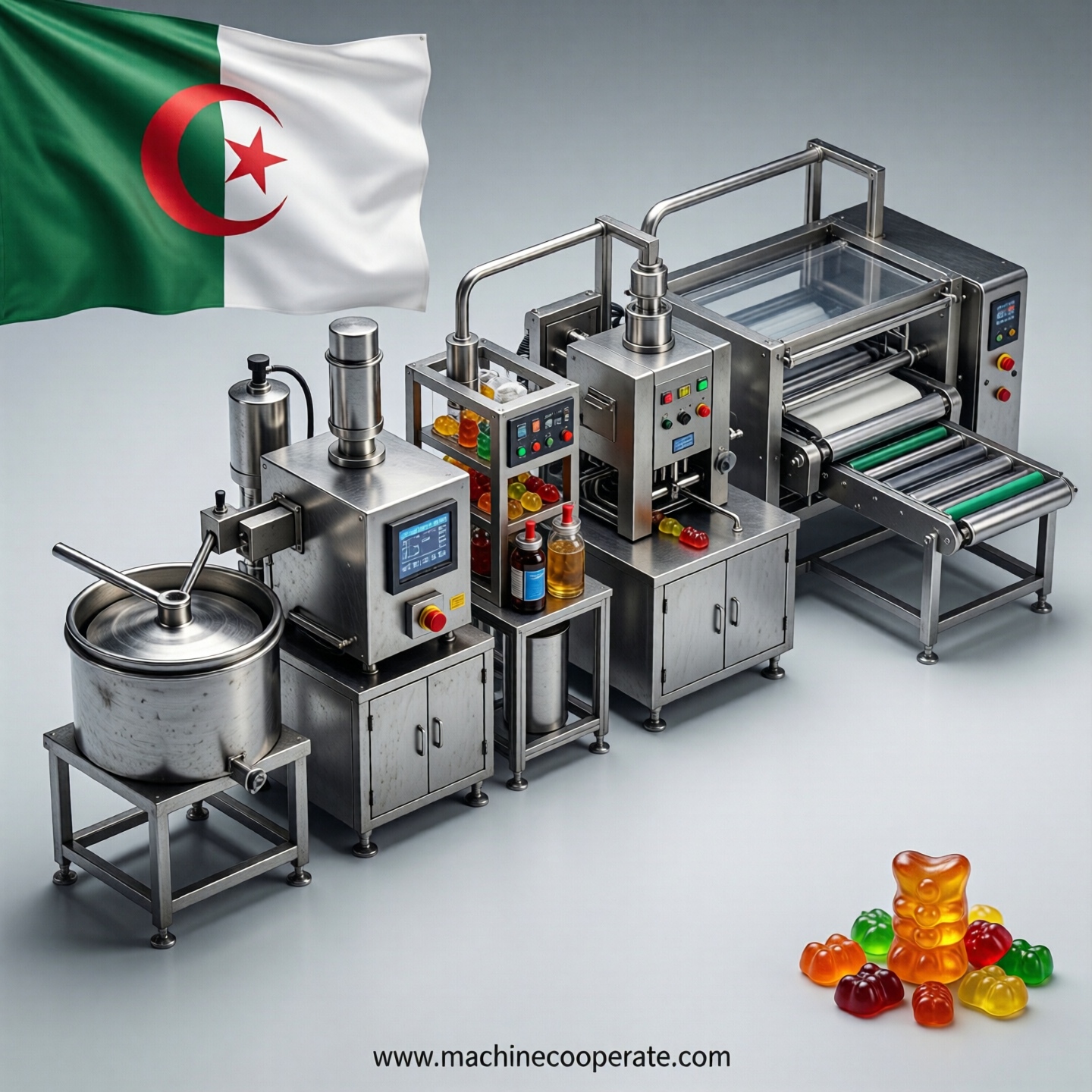
MachineCooperate continues to monitor the line remotely and will send a service engineer for preventive maintenance in the fourth quarter of this year. The client has already expressed interest in a second line to produce pectin-based fruit snacks, further deepening the partnership. MachineCooperate’s commitment to long-term collaboration—rather than one-off equipment sales—has turned a simple transaction into a strategic alliance that supports the rapid growth of Algeria’s gummy industry.
Our Products
-

Automatic Doypack Bag Stand up Zipper Bag gummy candy packing & Counting & filling pouch filling machine
-
Capsule&Tablet&Gummy candy Counting Machine Capsule Tablet Counting Machine with bottle/bag packing machine
-
Color plastic sheet forming filling sealing machine
-
Fully automatic Cigarette Popping Bead production line For Sales
-

Fully Automatic Soft Gel Ball capsule Production Line
-
Gold Coin Chocolate Packaging Machine with Advanced Control Systems
-
Gummy Candy Depositor for Labs & Small-Scale Production
-
Gummy Production Line & Machinery – Free Recipes with Our Equipment – 24/7 After-Sales Support
-
Hard Candy Production Line For Sales – Free Recipes with Our Equipment – 24/7 After-Sales Support
-
High-efficiency Popping Bead Machine Fully Automatic Production Equipment for Commercial Use Popping Bead Making Artifact
-
Industrial Jelly Gummy Candy Snack Sugar Coating Pan Drum Machine/candy Surface Polishing Machine
-
Lollipop Production Line – Free Recipes with Our Equipment – 24/7 After-Sales Support