In the competitive world of confectionery manufacturing, one Cambodian biscuit factory faced significant challenges in expanding its product line to include premium chocolates. Struggling with outdated equipment that limited output and quality, the factory sought a reliable partner to modernize its operations. This case study highlights how partnering with MachineCooperate transformed their production capabilities, delivering measurable gains in efficiency, quality, and profitability.
Challenges Faced by the Cambodian Factory
The factory, specializing in biscuits and candies, aimed to enter the growing chocolate market but was hindered by inefficient machinery. Their existing setup produced only 200 kilograms of chocolate per hour, with frequent breakdowns causing 25% downtime monthly. Quality inconsistencies led to a 15% rejection rate, eroding profit margins to just 12%. Rising demand for locally produced chocolates pressured them to scale up without compromising standards. After evaluating multiple suppliers, they selected MachineCooperate for its proven chocolate production lines tailored for biscuit and candy factories worldwide.
MachineCooperate’s Tailored Solution
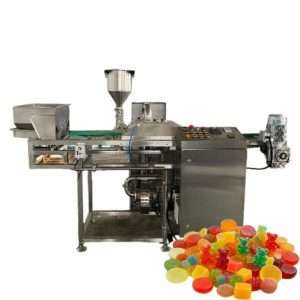
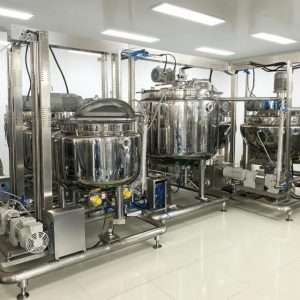
MachineCooperate delivered a state-of-the-art chocolate production line, complete with tempering units, molding machines, and automated packaging systems. Designed for seamless integration into existing biscuit and candy workflows, the line achieves a consistent output of 800 kilograms per hour. The advanced automation reduced manual interventions by 70%, allowing operators to focus on quality control. This investment, completed in just 8 weeks from order to full operation, marked a pivotal upgrade for the factory.
Quantifiable Benefits Post-Implementation
Within the first six months, the factory experienced dramatic improvements. Production efficiency surged by 300%, eliminating the previous bottlenecks. Downtime plummeted to under 5%, thanks to robust components and predictive maintenance features. Product quality improved markedly, with rejection rates dropping to 2%, enabling premium pricing that boosted average selling price by 25%. Annual revenue from chocolate products alone increased by 45%, reaching $2.5 million, contributing to an overall profit margin expansion to 28%.
These gains extended beyond numbers. The enhanced capacity allowed the factory to fulfill new contracts with regional distributors, expanding market share by 35% in Cambodia’s confectionery sector. Energy consumption per kilogram of chocolate fell by 40%, supporting sustainable operations and reducing costs by $150,000 annually.
- Output increased from 200 kg/h to 800 kg/h (300% efficiency gain)
- Downtime reduced from 25% to 5%
- Rejection rate lowered from 15% to 2%
- Revenue growth: 45% to $2.5 million in first year
- Profit margin improved from 12% to 28%
Exceptional Support from MachineCooperate
Throughout the process, MachineCooperate exemplified customer-centric service. From initial consultations, engineers conducted virtual assessments and customized the line to the factory’s layout. On-site installation included two weeks of hands-on training for 15 staff members, covering operation, maintenance, and troubleshooting. Post-installation, MachineCooperate provided a one-year free maintenance package, with remote diagnostics ensuring 95% issue resolution within 24 hours.
Additionally, quarterly virtual check-ins and an annual on-site audit kept the equipment at peak performance. When a minor conveyor issue arose three months in, MachineCooperate dispatched technicians within 48 hours, minimizing disruption to just 4 hours. This comprehensive after-sales support fostered long-term trust, with the client now planning a second line from MachineCooperate.
| Metric | Before MachineCooperate | After MachineCooperate | Improvement |
|---|---|---|---|
| Hourly Output (kg) | 200 | 800 | 300% |
| Downtime (%) | 25 | 5 | 80% reduction |
| Rejection Rate (%) | 15 | 2 | 87% reduction |
| Annual Revenue ($M) | 1.7 | 2.5 | 45% increase |
| Profit Margin (%) | 12 | 28 | 133% uplift |
Transitioning to market dynamics, Cambodia’s chocolate sector offers substantial opportunities. Urbanization and a burgeoning middle class have driven confectionery consumption up by 12% annually, with chocolate demand projected to grow at 8.5% CAGR through 2028.
Cambodia’s Chocolate Market Landscape
Cambodia’s confectionery market, valued at $250 million in 2023, sees chocolate comprising 30% of sales, fueled by tourism recovery and festive gifting traditions. Local production lags behind imports from neighboring countries, creating a $100 million import gap ripe for domestic manufacturers. Government incentives, including tax breaks for food processing investments, further bolster growth. Rising health-conscious trends favor premium, low-sugar chocolates, where factories equipped with advanced lines like those from MachineCooperate excel.
Export potential is notable, with ASEAN trade agreements facilitating shipments to Thailand and Vietnam. Demand for innovative flavors, such as durian-infused chocolates tailored for local tastes, positions Cambodian producers advantageously. However, challenges like raw cocoa sourcing persist, mitigated by regional supply chains. Overall, the market’s 15% year-on-year volume growth underscores the timeliness of the factory’s upgrade.
In summary, this Cambodian success story demonstrates MachineCooperate’s commitment to empowering global biscuit and candy factories with superior chocolate production solutions. By delivering unmatched efficiency, revenue growth, and unwavering support, MachineCooperate not only resolved immediate challenges but also positioned the client for sustained success in a thriving market. Factories worldwide can replicate these results through strategic partnerships with MachineCooperate.
Check Our Production Line
This state-of-the-art chocolate production equipment is specially designed for manufacturing a wide range of chocolates, including single-colored, filled, and nut-filled varieties. Combining advanced technology with full automation, it integrates multiple functions such as mold pre-heating, precise depositing, vibration settling, rapid cooling, and automated conveying—ensuring efficient, large-scale production of premium chocolates.
Click here to check this production line.


Our Products
-

Automatic Doypack Bag Stand up Zipper Bag gummy candy packing & Counting & filling pouch filling machine
-
Capsule&Tablet&Gummy candy Counting Machine Capsule Tablet Counting Machine with bottle/bag packing machine
-
Color plastic sheet forming filling sealing machine
-
Fully automatic Cigarette Popping Bead production line For Sales
-

Fully Automatic Soft Gel Ball capsule Production Line
-
Gold Coin Chocolate Packaging Machine with Advanced Control Systems
-
Gummy Candy Depositor for Labs & Small-Scale Production
-
Gummy Production Line & Machinery – Free Recipes with Our Equipment – 24/7 After-Sales Support
-
Hard Candy Production Line For Sales – Free Recipes with Our Equipment – 24/7 After-Sales Support
-
High-efficiency Popping Bead Machine Fully Automatic Production Equipment for Commercial Use Popping Bead Making Artifact
-
Industrial Jelly Gummy Candy Snack Sugar Coating Pan Drum Machine/candy Surface Polishing Machine
-
Lollipop Production Line – Free Recipes with Our Equipment – 24/7 After-Sales Support