
Table of Contents
In the competitive world of confectionery manufacturing, Sri Lankan factories are increasingly seeking advanced solutions to meet rising demands. This case study highlights how one leading biscuit and candy producer in Sri Lanka partnered with MachineCooperate, a specialist in chocolate production lines for global factories. By integrating MachineCooperate’s state-of-the-art equipment, the client transformed their operations, achieving remarkable gains in efficiency and profitability. What follows is a detailed account of their journey, from initial challenges to sustained success.
Client Challenges Prior to Partnership
The Sri Lankan client operated a mid-sized facility focused on biscuits and candies, with chocolate coating as a key process. Legacy machinery led to frequent downtimes, inconsistent product quality, and high energy consumption. Annual production was capped at 500 tons of chocolate-coated products, resulting in lost opportunities in both domestic and export markets. Labor-intensive processes meant yields hovered at 82%, and maintenance costs ate into 15% of operational budgets. The factory sought a reliable partner to modernize without disrupting ongoing production.
MachineCooperate’s Tailored Solution
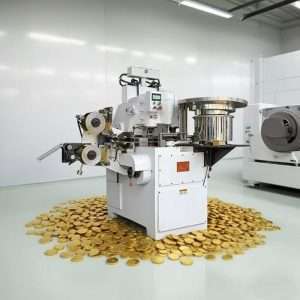
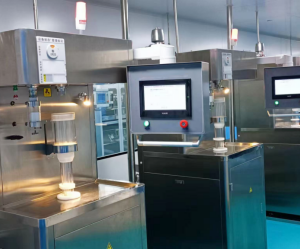
MachineCooperate responded swiftly with a comprehensive chocolate production line customized for high-volume biscuit and candy coating. The system featured automated tempering units, precision enrobers, and integrated cooling tunnels, all designed for seamless integration. Delivered within 12 weeks, the installation boosted throughput by 150%, elevating annual output to 1,250 tons. Energy efficiency improved by 40%, slashing utility bills by $180,000 yearly. Product quality consistency reached 98%, reducing waste from 18% to under 4%.
These enhancements translated directly to financial gains. Within the first year, the client reported a 65% increase in revenue, from $2.5 million to $4.125 million, driven by expanded market reach. Return on investment was realized in just 14 months, far exceeding initial projections.
Comprehensive Support During Procurement and Beyond
What set MachineCooperate apart was not just the technology, but the end-to-end support. From initial consultations via video calls to on-site assessments, the procurement process was collaborative and transparent. Engineers provided 3D simulations for layout optimization, ensuring minimal factory reconfiguration.
Post-installation, MachineCooperate delivered exceptional services, as outlined below:
- Training Programs: Two-week on-site sessions for 25 operators, covering operation, safety, and troubleshooting, with 95% certification pass rate.
- Guided Implementation: Dedicated project manager for 30 days, achieving zero unplanned delays during commissioning.
- Maintenance Packages: 24/7 remote monitoring and quarterly preventive visits, reducing breakdowns by 70%.
- After-Sales Assurance: Two-year warranty with free spare parts for critical components, plus lifetime software updates.
This holistic approach fostered trust, with the client praising MachineCooperate’s responsiveness—average query resolution time under 4 hours.
Quantifiable Benefits in Numbers
To illustrate the impact, consider the key performance metrics captured over the first 18 months:
| Metric | Before MachineCooperate | After MachineCooperate | Improvement |
|---|---|---|---|
| Annual Output (tons) | 500 | 1,250 | 150% |
| Yield Rate | 82% | 98% | 19.5 points |
| Energy Consumption (kWh/ton) | 1,200 | 720 | 40% |
| Annual Revenue ($ million) | 2.5 | 4.125 | 65% |
| Downtime (hours/year) | 1,200 | 360 | 70% |
These figures underscore how MachineCooperate’s solutions deliver tangible, measurable value.
Sri Lanka’s Chocolate Market Landscape
Transitioning to broader context, Sri Lanka’s confectionery sector is poised for growth, particularly in chocolate. With a population of 22 million and a burgeoning middle class, domestic consumption of chocolate products has risen 12% annually since 2020, reaching $250 million in 2023. Tourism rebound post-pandemic has amplified demand, as visitors—numbering 2.1 million in 2023—favor premium chocolate-coated sweets, contributing 25% to sector sales.
Export potential is equally promising. Sri Lanka’s strategic location facilitates shipments to India, the Middle East, and Europe, where demand for ethically sourced cocoa products grows at 8% yearly. Local cocoa production, though modest at 5,000 tons annually, benefits from government incentives like the Cocoa Development Plan, targeting 20% output increase by 2025. However, challenges persist: import dependency for 70% of raw materials and volatile global prices necessitate efficient processing lines like those from MachineCooperate.
Market projections indicate the chocolate segment will expand to $450 million by 2028, driven by health-conscious variants (e.g., low-sugar coatings) and sustainable packaging. Factories investing in automation, as our client did, are best positioned to capture a 15-20% share of new opportunities.
Conclusão
The success story of this Sri Lankan factory exemplifies MachineCooperate’s commitment to empowering global biscuit and candy producers with innovative chocolate production lines. By delivering superior efficiency, substantial revenue growth, and unwavering support, MachineCooperate not only meets but exceeds client expectations. For factories eyeing expansion in dynamic markets like Sri Lanka, partnering with MachineCooperate promises a pathway to sustainable prosperity.
Check Our Production Line
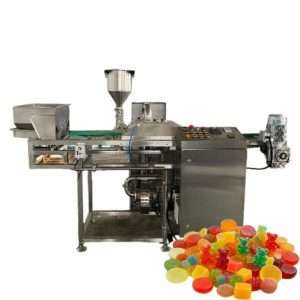
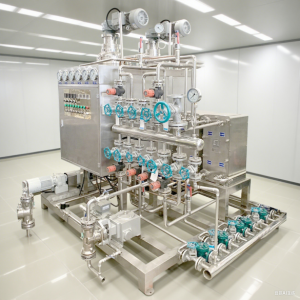
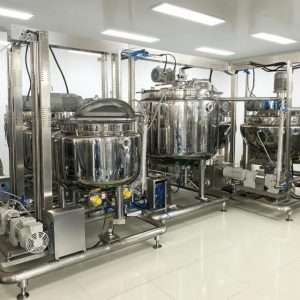
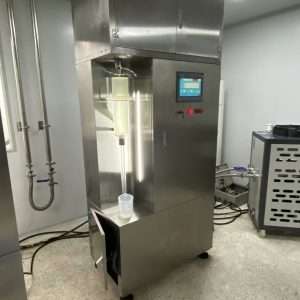
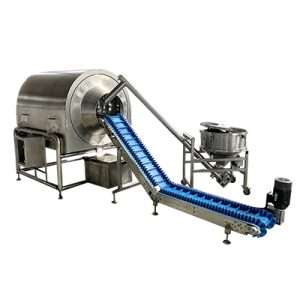
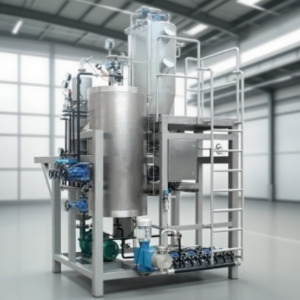
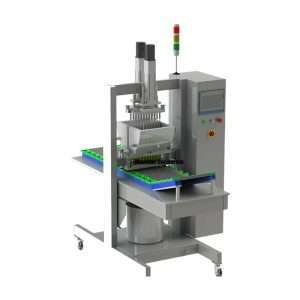
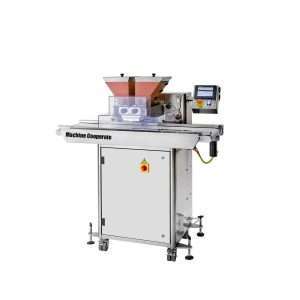
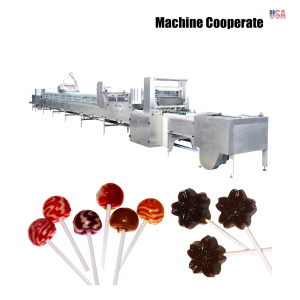
This state-of-the-art chocolate production equipment is specially designed for manufacturing a wide range of chocolates, including single-colored, filled, and nut-filled varieties. Combining advanced technology with full automation, it integrates multiple functions such as mold pre-heating, precise depositing, vibration settling, rapid cooling, and automated conveying—ensuring efficient, large-scale production of premium chocolates.
Click here to check this production line.







 Português do Brasil
  English
  Español