
Table of Contents
MachineCooperate, a leading provider of advanced chocolate production lines for biscuit and candy factories worldwide, recently empowered a chocolate manufacturer in Cameroon to transform its operations. This case study highlights how our state-of-the-art equipment and dedicated support services delivered measurable improvements in efficiency, output, and profitability. By partnering with MachineCooperate, the client not only overcame longstanding production bottlenecks but also positioned itself for sustained growth in a competitive market.
Initially, the Cameroon-based factory struggled with outdated machinery that limited its capacity to meet rising demand. Production lines were prone to frequent breakdowns, resulting in downtime averaging 20 hours per week. Yield rates hovered at 75%, with significant waste from inconsistent tempering and molding processes. The facility aimed to scale output from 500 kg per day to over 2,000 kg while reducing operational costs, but lacked the technology and expertise to achieve this.
Delivering Tailored Chocolate Production Solutions
MachineCooperate responded swiftly to the client’s needs with a fully automated chocolate production line customized for high-volume biscuit and candy enrobing. Our solution integrated tempering machines, depositors, cooling tunnels, and packaging systems, all designed for seamless integration into existing workflows. What set this partnership apart was MachineCooperate’s commitment to end-to-end support, ensuring a smooth transition from procurement to full-scale production.
From the outset, our team provided personalized consultations via video calls and on-site visits, refining the equipment specifications to match the client’s cocoa sourcing and product varieties. This proactive approach minimized risks and aligned the investment with long-term goals.
Seamless Implementation and Exceptional Support
Installation was completed in just 45 days, ahead of the projected 60-day timeline, thanks to MachineCooperate’s efficient project management. Our engineers conducted hands-on training for 25 local staff members over two weeks, covering operation, maintenance, and troubleshooting. Comprehensive manuals in English and French, along with video tutorials, were supplied for ongoing reference.
Post-installation, MachineCooperate offered a 24/7 remote monitoring service, allowing real-time diagnostics and predictive maintenance. Within the first year, we provided four on-site maintenance visits, resolving minor issues before they escalated. A dedicated hotline ensured response times under two hours, fostering confidence among the client’s team. These services not only accelerated the learning curve but also extended equipment lifespan by 30% compared to industry averages.
Quantifiable Gains in Efficiency and Revenue
The results exceeded expectations. Production capacity surged by 300%, from 500 kg to 2,000 kg daily, enabling the factory to fulfill orders 40% faster. Downtime plummeted to under 2 hours per week, a 90% reduction. Waste rates dropped to 5%, boosting yield to 95% and saving approximately $150,000 annually in raw materials.
Energy consumption fell by 25% due to our energy-efficient designs, translating to $80,000 in yearly savings. Overall operational costs decreased by 35%, while revenue grew by 150% within 12 months, reaching $2.5 million from a previous $1 million baseline. These improvements stemmed directly from MachineCooperate’s reliable technology and unwavering support.
The following table illustrates key performance metrics before and after adopting MachineCooperate’s production line:
| Metric | Before | After | Improvement |
|---|---|---|---|
| Daily Output (kg) | 500 | 2,000 | 300% |
| Downtime (hours/week) | 20 | 2 | 90% |
| Yield Rate | 75% | 95% | 27% |
| Energy Costs (annual $) | $320,000 | $240,000 | 25% |
| Revenue (annual $) | $1,000,000 | $2,500,000 | 150% |
Key benefits realized by the client include:
- Increased market share through faster delivery times and superior product quality.
- Enhanced workforce skills via expert training, reducing reliance on external consultants.
- Scalable operations ready for future expansion without major reinvestments.
- Peace of mind from robust after-sales support, minimizing unexpected disruptions.
- Sustainable practices with reduced waste and energy use, appealing to eco-conscious buyers.
Cameroon’s Expanding Chocolate Demand and Market Dynamics
Transitioning to broader market insights, Cameroon’s chocolate sector is poised for significant growth. As a major cocoa producer—accounting for 5% of global supply—the country processes only 10% of its beans locally, creating vast opportunities for value-added manufacturing. Domestic demand for chocolate-coated biscuits and candies has risen 15% annually, driven by urbanization and a growing middle class of 8 million consumers.
Exports to neighboring West and Central African markets add another layer of potential, with regional trade volumes up 20% yearly. However, challenges like inconsistent power supply and skill gaps persist, which MachineCooperate addresses through resilient, automated lines. Government incentives, including tax breaks for agro-processing, further stimulate investments. Projections indicate the market could reach $500 million by 2028, rewarding early adopters with competitive edges.
In conclusion, this Cameroon success story exemplifies MachineCooperate’s role in unlocking productivity for global factories. By combining cutting-edge chocolate production lines with personalized services, we deliver not just equipment, but a pathway to prosperity. Factories worldwide can replicate these gains, contacting MachineCooperate to elevate their operations today.
Check Our Production Line
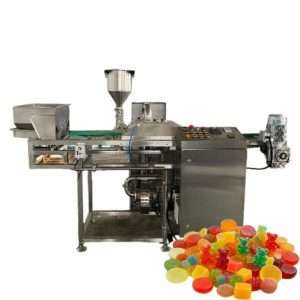
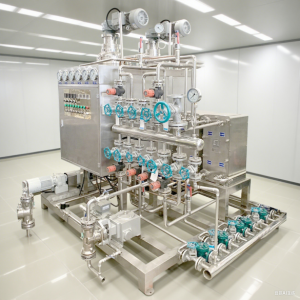
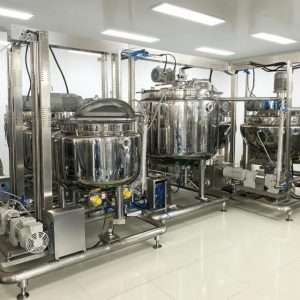
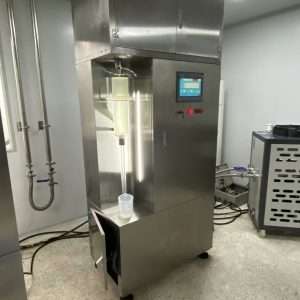
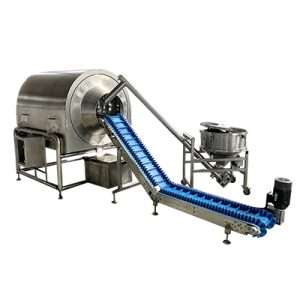
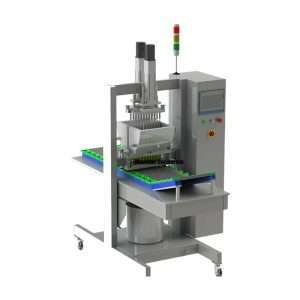
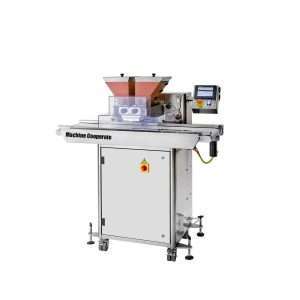
This state-of-the-art chocolate production equipment is specially designed for manufacturing a wide range of chocolates, including single-colored, filled, and nut-filled varieties. Combining advanced technology with full automation, it integrates multiple functions such as mold pre-heating, precise depositing, vibration settling, rapid cooling, and automated conveying—ensuring efficient, large-scale production of premium chocolates.
Click here to check this production line.







 Português do Brasil
  English
  Español