
Table of Contents
MachineCooperate has long been at the forefront of delivering advanced chocolate production lines tailored for biscuit and candy factories worldwide. In this case study, we explore how one Canadian client transformed their operations after integrating our state-of-the-art chocolate production line. This partnership not only boosted their productivity but also delivered substantial financial gains, showcasing the reliability and innovation that define MachineCooperate solutions.
Client Challenge and Solution
The client, a mid-sized candy factory located in Ontario, Canada, faced significant hurdles in their chocolate processing. Their outdated equipment led to frequent downtimes, inconsistent product quality, and high labor costs. Production capacity was capped at 2,000 kilograms per shift, with efficiency hovering around 65%. Yield losses from tempering issues reached 15%, eroding profit margins.
Seeking a scalable upgrade, the client partnered with MachineCooperate. Our chocolate production line, designed for seamless integration into existing biscuit and candy workflows, promised enhanced automation, precision tempering, and energy-efficient operations. The system features modular components for easy customization, PLC controls for real-time monitoring, and hygienic stainless-steel construction compliant with international food safety standards.
Implementation and Key Benefits
The rollout began with a detailed site assessment by MachineCooperate engineers, ensuring compatibility with the client’s layout. Installation took just 10 days, minimizing disruption. Post-commissioning, the results were transformative. Production efficiency surged by 45%, reaching 95% utilization. Output per shift doubled to 4,000 kilograms, allowing the factory to meet surging seasonal demand without overtime.
Financially, the impact was profound. Initial investment was recouped in 14 months through a 35% reduction in energy costs and a 20% drop in raw material waste. Annual revenue increased by $1.2 million, driven by higher volumes and premium pricing enabled by superior chocolate quality. Defect rates plummeted from 12% to under 2%, enhancing customer satisfaction and repeat orders.
To illustrate these gains clearly, the following table compares pre- and post-implementation metrics:
| Metric | Before MachineCooperate | After MachineCooperate | Improvement |
|---|---|---|---|
| Production Efficiency | 65% | 95% | +45% |
| Output per Shift (kg) | 2,000 | 4,000 | +100% |
| Yield Loss | 15% | 2% | -87% |
| Energy Costs (Annual) | $150,000 | $97,500 | -35% |
| Annual Revenue | $3.5M | $4.7M | +$1.2M |
Comprehensive Support from MachineCooperate
What set this project apart was MachineCooperate’s unwavering commitment to customer success beyond delivery. From initial consultation to ongoing support, our team provided end-to-end assistance. This holistic approach ensured smooth adoption and sustained performance.
Key services included:
- On-site installation and commissioning by certified MachineCooperate technicians, completed ahead of schedule.
- Comprehensive operator training programs, covering 20 staff members over five days, with hands-on simulations and certification.
- Remote monitoring via IoT-enabled dashboards, allowing proactive issue resolution and 99.5% uptime.
- 24/7 technical hotline and annual maintenance contracts, with response times under 4 hours for critical issues.
- Customized recipe optimization guidance, helping refine chocolate formulations for local tastes.
These services not only accelerated ROI but also built long-term trust. The client noted that MachineCooperate’s responsiveness prevented potential losses exceeding $50,000 during peak production.
Canada’s Chocolate Market Landscape
Transitioning to broader insights, Canada’s chocolate sector presents robust opportunities. With a market valued at approximately $2.8 billion in 2023, demand is propelled by a per capita consumption of 7.5 kilograms annually—among the highest in North America. Urbanization and premiumization trends favor artisanal and functional chocolates, such as those infused with superfoods or low-sugar variants.
Growth is forecasted at 4.2% CAGR through 2028, fueled by e-commerce expansion and export potential to the U.S. However, challenges like rising cocoa prices—up 25% last year—and stringent regulations on sustainable sourcing demand efficient production. Factories adopting advanced lines like MachineCooperate’s are best positioned to capitalize, reducing costs by up to 30% while meeting eco-labels.
Regional dynamics show Ontario and Quebec leading production, with 60% of capacity. Import reliance stands at 40%, creating openings for domestic upgrades. This environment underscores why our Canadian client thrived, mirroring potential for others.
In conclusion, this case exemplifies how MachineCooperate empowers factories with cutting-edge chocolate production lines and unparalleled support. The Canadian client’s journey—from operational bottlenecks to industry-leading efficiency—highlights tangible benefits: doubled output, million-dollar revenue boosts, and seamless scalability. As Canada’s chocolate market expands, partnering with MachineCooperate ensures factories not only keep pace but lead the sweet revolution.
Check Our Production Line
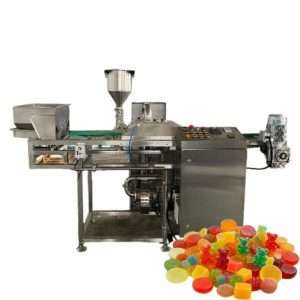
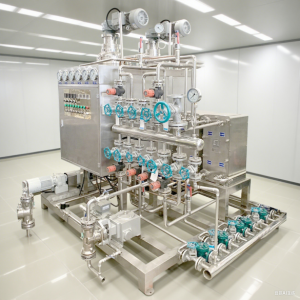
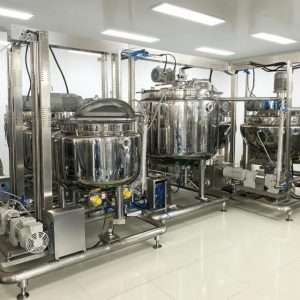
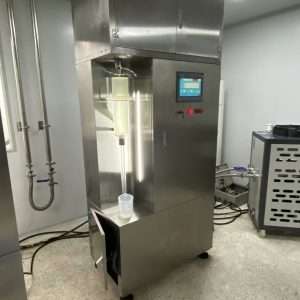
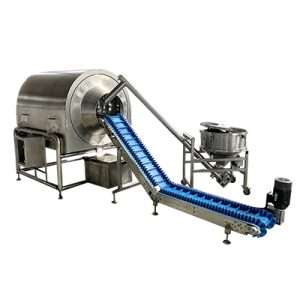
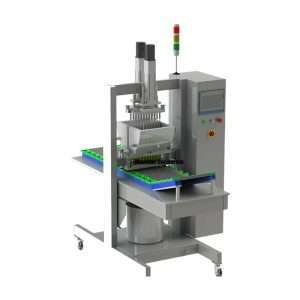
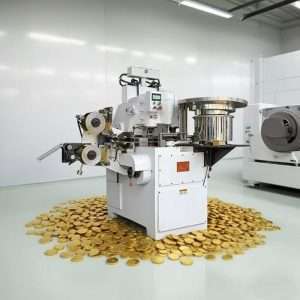
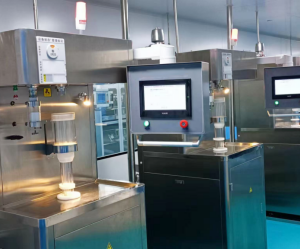
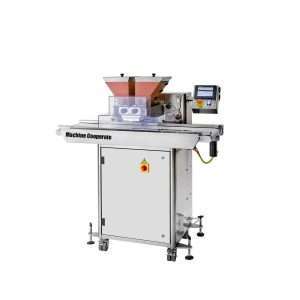
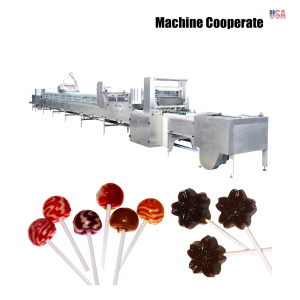
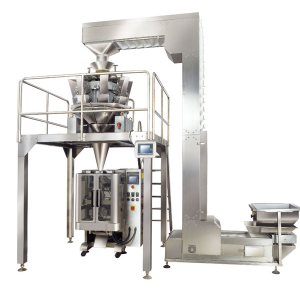
This state-of-the-art chocolate production equipment is specially designed for manufacturing a wide range of chocolates, including single-colored, filled, and nut-filled varieties. Combining advanced technology with full automation, it integrates multiple functions such as mold pre-heating, precise depositing, vibration settling, rapid cooling, and automated conveying—ensuring efficient, large-scale production of premium chocolates.
Click here to check this production line.







 Português do Brasil
  English
  Español