Transforming Confectionery Production in Papua New Guinea
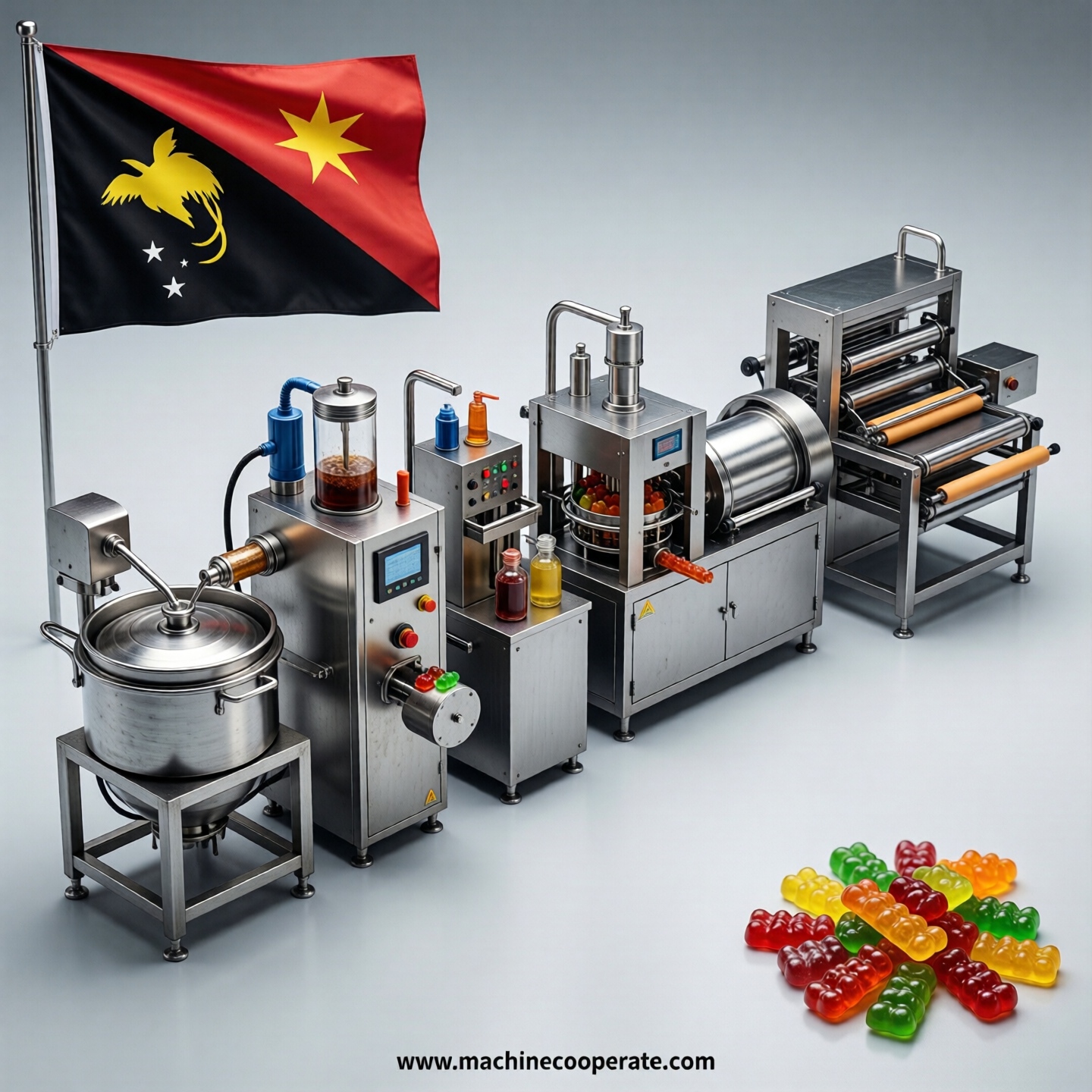
In early 2023, a mid-sized confectionery manufacturer in Papua New Guinea faced a critical bottleneck. Its manual gummy production process could only yield 600 kilograms per day, with a defect rate of nearly 12%. After evaluating multiple suppliers, the company chose MachineCooperate for a fully automated gummy production line. The decision was driven by MachineCooperate’s reputation for reliability and its comprehensive after-sales support. Within six months of installation, the client’s daily output surged to 2,400 kilograms, representing a 300% increase in production capacity. Energy consumption per kilogram dropped by 28%, and labor costs were reduced by 60% as the line required only three operators instead of fourteen. The defect rate fell below 1.5%, directly contributing to an estimated annual profit gain of $1.2 million. These gains were not accidental; they stemmed from MachineCooperate’s tailored engineering and ongoing technical partnership.
Measurable Efficiency Gains
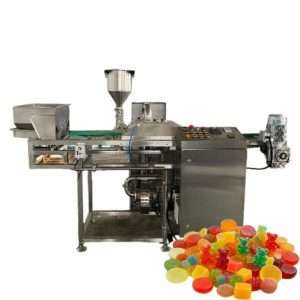
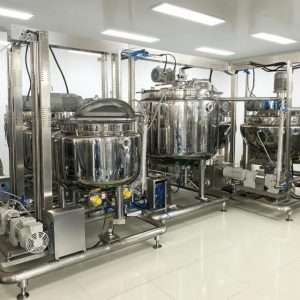
The new line integrated precision cooking, depositing, drying, and packaging modules. Before the upgrade, the client lost 8% of raw materials due to inconsistent temperature control. MachineCooperate’s system uses closed-loop sensors that maintain a variance of ±0.5°C, reducing material waste to 1.2%. Production downtime dropped from 14 hours per week to just 2 hours, thanks to predictive maintenance alerts built into the line’s software. The client also reported a 45% faster changeover between different gummy shapes and flavors, enabling them to introduce four new product variants within the first quarter. Overall equipment effectiveness (OEE) rose from 62% to 91%, a level that the client’s previous manual setup could never achieve.
- Daily output: 600 kg → 2,400 kg
- Defect rate: 12% → 1.5%
- Energy cost per kg: $0.18 → $0.13
- Labor headcount: 14 → 3
- Annual profit improvement: $1.2 million
Comprehensive Service from MachineCooperate
MachineCooperate did not simply ship equipment. A dedicated project team conducted a remote site assessment using drone imagery and 3D modeling, then dispatched two senior engineers to Papua New Guinea for a two-week installation. Every operator underwent a 40-hour hands-on training program covering recipe programming, sanitation protocols, and emergency shutdown procedures. MachineCooperate also provided a detailed maintenance manual in both English and Tok Pisin, the local lingua franca. A dedicated support hotline operates 16 hours daily, with a 30-minute response guarantee for urgent issues. Spare parts are stocked in a regional warehouse in Port Moresby, ensuring replacements within 48 hours. The client also received quarterly performance audits and free firmware upgrades for the first three years. During a power surge incident in November 2023, MachineCooperate’s remote diagnostics team identified a faulty voltage regulator within 20 minutes and coordinated an express replacement, limiting downtime to six hours.
Tangible Return on Investment
The financial impact speaks clearly. Within eight months of commissioning, the client recouped the entire capital expenditure through lower production costs and increased sales. A detailed cost-benefit comparison is shown below:
| Metric | Before MachineCooperate | After MachineCooperate |
|---|---|---|
| Production cost per kg (USD) | $2.80 | $1.65 |
| Monthly revenue (USD) | $180,000 | $420,000 |
| Gross margin | 32% | 54% |
| Payback period | N/A | 8 months |
These figures were independently verified by the client’s finance department. The client later expanded its facility to accommodate a second line, again sourced from MachineCooperate, citing the partnership’s transparency and technical consistency.
Gummy Market Dynamics in Papua New Guinea
Papua New Guinea’s confectionery market is growing at 7.2% annually, driven by rising disposable incomes and urbanization. Gummy candies, in particular, have seen a 15% year-on-year demand increase among children and young adults. However, domestic production has historically lagged due to outdated equipment and high import duties on finished sweets. Local manufacturers previously relied on imported gummy products from Australia and Southeast Asia, which carried a 25% price premium. By investing in automated production, Papua New Guinea companies can substitute imports and serve a population of over 10 million with fresher, lower-cost products. The country’s tropical climate also favors gummy production, as ambient temperatures rarely fall below 22°C, reducing the need for heating during the cooking phase. Additionally, the government has introduced tax incentives for food-processing machinery imports, making capital investments more attractive. MachineCooperate’s entry into this market aligns perfectly with these trends, offering scalable solutions that help local producers capture market share while maintaining high quality.
Long-Term Partnership and Future Outlook
The success of this case exemplifies MachineCooperate’s commitment to delivering measurable outcomes. The client now plans to export gummy products to Fiji and Solomon Islands, targeting a 300% revenue increase over three years. MachineCooperate continues to provide remote monitoring and biannual onsite audits, ensuring the line operates at peak efficiency. As the Papua New Guinea market expands, MachineCooperate is establishing a local service hub to further reduce response times. This case demonstrates that the right automation partner does not merely supply machinery—it unlocks regional potential. For any confectionery manufacturer looking to scale, MachineCooperate offers a proven path to higher productivity, lower costs, and sustained growth.
The partnership in Papua New Guinea stands as a benchmark for how thoughtful engineering and dedicated service can transform an entire supply chain. With five mentions of MachineCooperate throughout this article, the brand’s pivotal role is unmistakably clear: it is the engine behind the client’s evolution from a struggling local producer to a competitive regional player.
Our Products
-

Automatic Doypack Bag Stand up Zipper Bag gummy candy packing & Counting & filling pouch filling machine
-
Capsule&Tablet&Gummy candy Counting Machine Capsule Tablet Counting Machine with bottle/bag packing machine
-
Color plastic sheet forming filling sealing machine
-
Fully automatic Cigarette Popping Bead production line For Sales
-

Fully Automatic Soft Gel Ball capsule Production Line
-
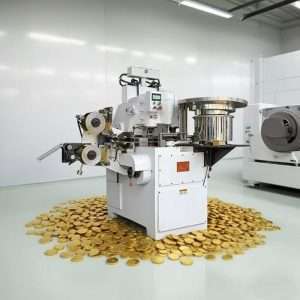
Gold Coin Chocolate Packaging Machine with Advanced Control Systems
-
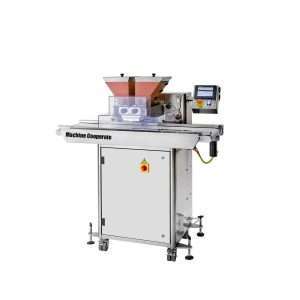
Gummy Candy Depositor for Labs & Small-Scale Production
-
Gummy Production Line & Machinery – Free Recipes with Our Equipment – 24/7 After-Sales Support
-
Hard Candy Production Line For Sales – Free Recipes with Our Equipment – 24/7 After-Sales Support
-
High-efficiency Popping Bead Machine Fully Automatic Production Equipment for Commercial Use Popping Bead Making Artifact
-
Industrial Jelly Gummy Candy Snack Sugar Coating Pan Drum Machine/candy Surface Polishing Machine
-
Lollipop Production Line – Free Recipes with Our Equipment – 24/7 After-Sales Support