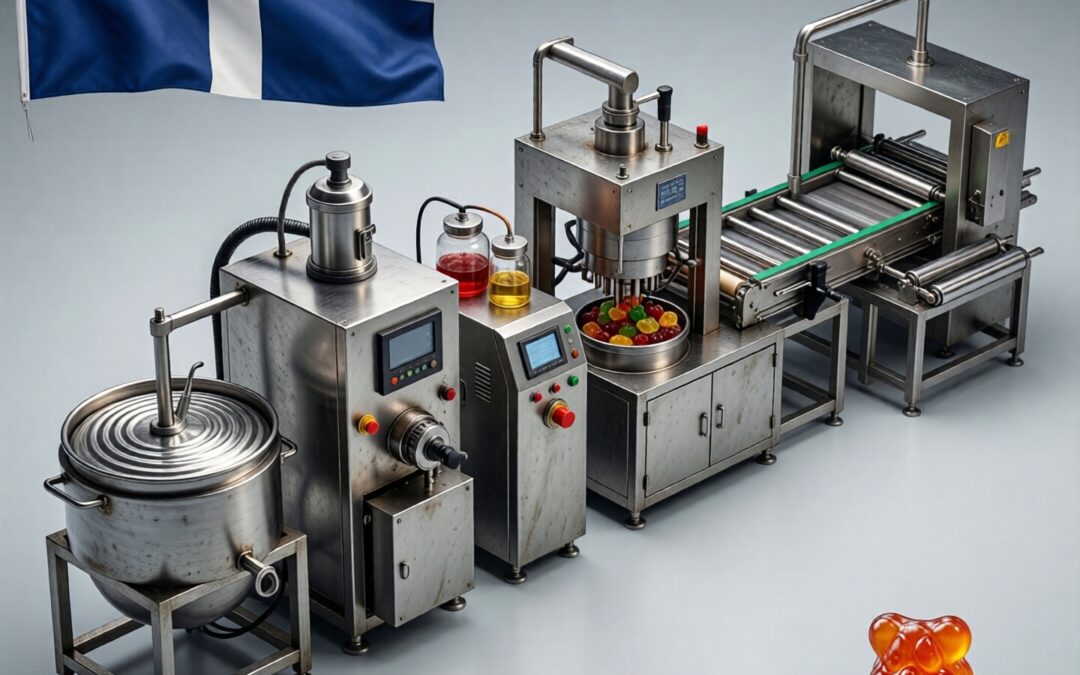
Client Background and Initial Challenges
A mid-sized confectionery manufacturer in the Dominican Republic, specializing in fruit-flavored candies, identified a strategic opportunity to diversify into the gummy segment. The company operated a legacy production setup that relied on batch-cooking methods and manual molding, yielding approximately 120 kilograms of chewy candies per hour. Output consistency suffered from frequent temperature fluctuations, resulting in 8 to 12 percent product rejection rates. Packaging was largely manual, requiring 14 workers per shift to meet existing demand. The management sought a partner capable of delivering a turnkey solution that could scale production, improve product uniformity, and reduce labor dependency. After evaluating multiple proposals, the company selected MachineCooperate to design, manufacture, and commission a fully automated gummy production line tailored to their specific formulation and throughput requirements.
The MachineCooperate Solution
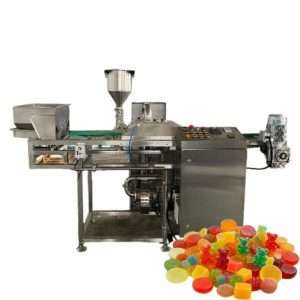
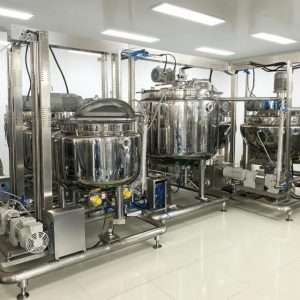
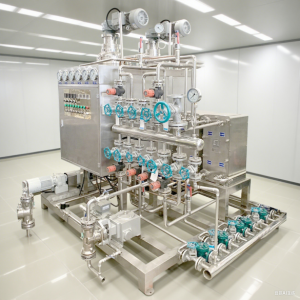
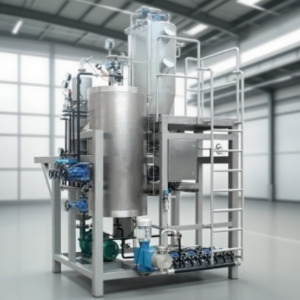
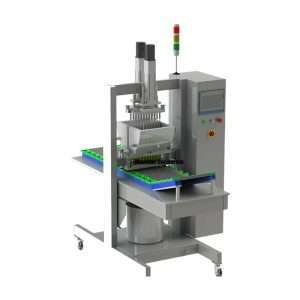
MachineCooperate deployed a modular gummy production line rated at 400 kilograms per hour, integrating a continuous cooking system, vacuum-deaeration unit, multi-lane depositor, tunnel cooling system, and automated packaging station. The cooking module utilized a scraped-surface heat exchanger that maintained temperature within a 0.5°C tolerance, virtually eliminating scorching and inconsistent gelation. The depositor featured servo-driven nozzles capable of producing 36 distinct shapes simultaneously, which allowed the client to run multiple product SKUs without mold changeover downtime. Cooling tunnels were engineered for the tropical ambient conditions of the Dominican Republic, operating at a refrigerant temperature of -10°C to accelerate setting time. MachineCooperate also customized the PLC control software to accept batch recipes in both metric and imperial units, accommodating the client’s existing formulation data. The entire line occupied 40 percent less floor space than the client’s previous setup, an important advantage given the factory’s layout constraints.
Measurable Operational Improvements
Six months after commissioning, the client reported substantial gains across key performance indicators. The table below summarizes the before-and-after comparison for the primary production metrics tracked by the manufacturer.
| Metric | Before MachineCooperate | After MachineCooperate | Change |
| Line throughput (kg/hr) | 120 | 385 | +221% |
| Product rejection rate (%) | 9.5 | 1.8 | -81% |
| Workers per shift | 14 | 4 | -71% |
| Annual production volume (metric tons) | 720 | 2,310 | +221% |
| Average line uptime (%) | 76 | 94 | +24% |
The reduction in rejection rate alone saved approximately 42 metric tons of raw material annually, representing a cost avoidance of roughly $168,000 at prevailing ingredient prices. Labor cost savings exceeded $215,000 per year, while the increased throughput allowed the client to accept three large private-label contracts that had previously been unattainable. MachineCooperate’s engineering team worked closely with the client’s maintenance crew to calibrate the depositor for optimal weight accuracy, achieving a standard deviation of 0.3 grams per piece, which improved net-weight compliance and reduced giveaway in pre-packed bags.
Comprehensive Support and Post-Installation Services
MachineCooperate provided a structured support framework that covered every phase from contract signing to ongoing operations. The services included the following key elements:
- On-site process training for 12 operators and supervisors, covering recipe scaling, line start-up, and emergency stop procedures, conducted in Spanish over a five-day period
- A remote monitoring system with real-time alerts that connected the client’s PLC to MachineCooperate’s technical center, enabling proactive diagnostics and reducing mean time to repair by 38 percent
- Scheduled preventive maintenance visits every quarter during the first two years, including lubrication calibration and replacement of wear parts such as depositor nozzles and cooling belt segments
- A dedicated spare parts inventory held at MachineCooperate’s regional hub in Miami, guaranteeing two-day delivery to Santo Domingo for any critical component
- Comprehensive documentation in both English and Spanish, including electrical schematics, hydraulic diagrams, and troubleshooting flowcharts laminated for factory-floor use
During the first year of operation, the client experienced two unplanned stoppages related to a local power fluctuation issue. MachineCooperate dispatched a field service engineer within 48 hours, who installed an additional voltage stabilization module at no extra cost. This level of responsiveness built significant trust and led the client to order a second line for starch-molded jellies just 14 months after the initial installation.
Dominican Republic Gummy Market Dynamics
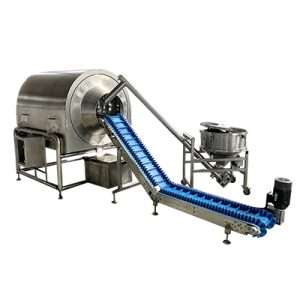
The Dominican Republic represents a growing market for gummy confectionery, driven by several structural factors. Per capita consumption of gelatin-based sweets in the country increased from 0.8 kilograms in 2018 to approximately 1.4 kilograms in 2023, according to trade data. This growth correlates with expanding supermarket chains and convenience store networks that allocate more shelf space to branded and private-label gummy products. The tourism sector, which welcomed over 8.5 million visitors in 2023, creates substantial demand for individually wrapped gummy portions sold in resort gift shops and airport retail outlets. Additionally, the country’s proximity to the United States, combined with its participation in the Dominican Republic-Central America Free Trade Agreement, offers export-oriented manufacturers tariff advantages for shipping gummy products northward. Local confectionery producers face challenges including intermittent electricity supply and high ambient humidity that complicates sugar-dusting and final packaging seal integrity. MachineCooperate addressed these specific conditions by incorporating a humidity-controlled coating drum and a dual-chamber packaging machine with desiccant insertion capability. The client’s expanded capacity now positions them to capture a projected 12 percent share of the domestic gummy market within two years, up from an estimated 5 percent before the MachineCooperate line was installed.
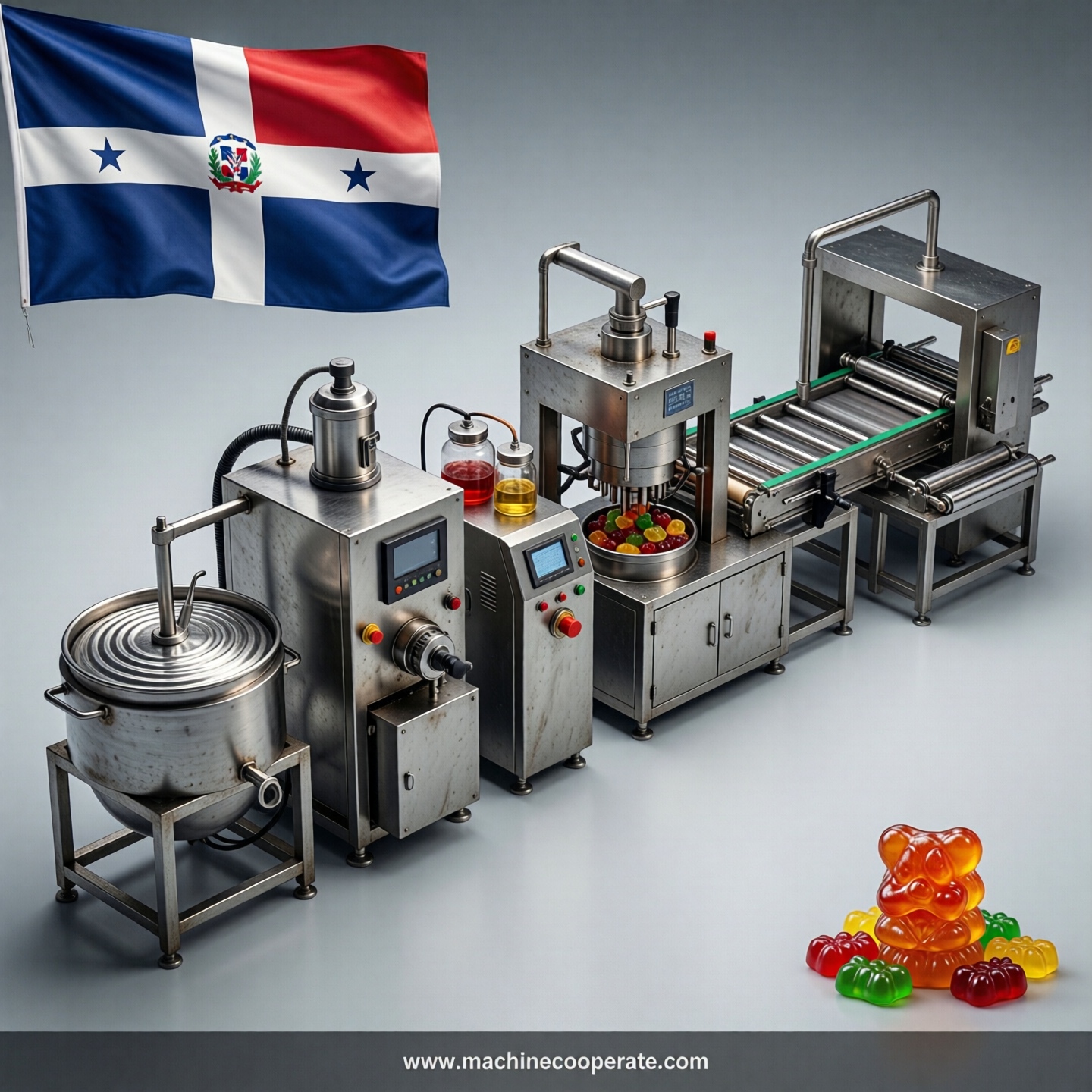
The partnership between the Dominican manufacturer and MachineCooperate demonstrates how a tailored production line, combined with comprehensive support infrastructure, can transform operational capabilities in an emerging-market context. The client achieved a 3.2-fold increase in output, an 81 percent reduction in waste, and a labor productivity improvement that reduced per-kilogram production cost by 34 percent. These gains directly enabled the company to enter export channels, with initial container shipments to Puerto Rico and Haiti already underway. MachineCooperate continues to monitor the line’s performance through remote telemetry, and a firmware upgrade scheduled for the next quarter will further optimize energy consumption during low-demand periods. The success of this installation has generated referral business for MachineCooperate in neighboring Caribbean markets, reinforcing the value of a partner who understands both the technical requirements of gummy production and the operational realities of confectionery manufacturing in tropical climates.
Our Products
-

Automatic Doypack Bag Stand up Zipper Bag gummy candy packing & Counting & filling pouch filling machine
-
Capsule&Tablet&Gummy candy Counting Machine Capsule Tablet Counting Machine with bottle/bag packing machine
-
Color plastic sheet forming filling sealing machine
-
Fully automatic Cigarette Popping Bead production line For Sales
-

Fully Automatic Soft Gel Ball capsule Production Line
-
Gold Coin Chocolate Packaging Machine with Advanced Control Systems
-
Gummy Candy Depositor for Labs & Small-Scale Production
-
Gummy Production Line & Machinery – Free Recipes with Our Equipment – 24/7 After-Sales Support
-
Hard Candy Production Line For Sales – Free Recipes with Our Equipment – 24/7 After-Sales Support
-
High-efficiency Popping Bead Machine Fully Automatic Production Equipment for Commercial Use Popping Bead Making Artifact
-
Industrial Jelly Gummy Candy Snack Sugar Coating Pan Drum Machine/candy Surface Polishing Machine
-
Lollipop Production Line – Free Recipes with Our Equipment – 24/7 After-Sales Support