
Table of Contents
In the competitive world of confectionery manufacturing, efficiency and reliability are paramount. MachineCooperate, a leading provider of advanced chocolate production lines for global biscuit and candy factories, recently empowered a Nepal-based candy producer to transform its operations. This case study highlights how our state-of-the-art equipment delivered measurable gains in productivity and profitability, while our comprehensive support services ensured a seamless transition.
Client Background and Initial Challenges
The client, a mid-sized candy factory in Nepal’s Kathmandu Valley, specialized in chocolate-coated treats and biscuits. Prior to partnering with MachineCooperate, their production relied on outdated semi-manual machinery. This setup limited output to just 500 kilograms per day, with frequent downtimes averaging 20% of operating hours due to mechanical failures and inconsistent tempering. Quality inconsistencies led to 15% product rejection rates, eroding profit margins and hindering market expansion. Rising demand for premium chocolates in Nepal prompted the need for modernization.
Implementing the MachineCooperate Solution
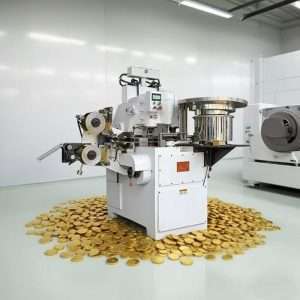
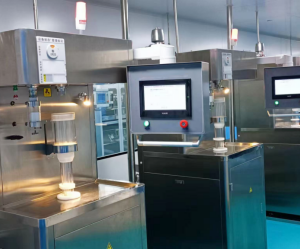
Recognizing these pain points, the client selected MachineCooperate’s fully automated chocolate production line, complete with conching, tempering, molding, and enrobing modules. The system was customized to handle 2,000 kilograms daily, featuring energy-efficient heating and PLC controls for precision. Installation commenced within four weeks of order placement, with MachineCooperate engineers providing remote guidance followed by on-site setup in Kathmandu.
Our commitment to customer success extended beyond delivery. MachineCooperate offered tailored services throughout the process:
- Pre-sales consultation: Detailed factory audits via video calls to optimize line layout, reducing setup time by 30%.
- On-site training: Two weeks of hands-on sessions for 10 staff members, covering operation, cleaning, and troubleshooting, achieving 95% operator proficiency.
- Remote monitoring: IoT-enabled diagnostics for real-time issue detection, minimizing unplanned stops.
- After-sales support: 24/7 hotline, annual maintenance kits, and free spare parts for the first year, ensuring 98% uptime.
These services fostered trust, as evidenced by the client’s feedback on our responsive communication and proactive problem-solving.
Quantifiable Benefits and Performance Metrics
Post-implementation, the transformation was dramatic. Production capacity surged 300%, from 500kg to 2,000kg daily. Downtime plummeted to under 2%, thanks to the robust design and predictive maintenance from MachineCooperate. Rejection rates dropped to 2%, enhancing product quality and customer satisfaction.
The financial impact was equally compelling. Operational costs fell 40% due to lower energy consumption (25% reduction) and labor needs (cut by 50%, from 25 to 12 workers per shift). Monthly revenue climbed 250%, from $50,000 to $175,000, driven by faster order fulfillment and entry into premium retail channels. Return on investment was realized in just 14 months, far exceeding projections.
| Metric | Before MachineCooperate | After MachineCooperate | Improvement |
|---|---|---|---|
| Daily Output (kg) | 500 | 2,000 | 300% |
| Downtime (%) | 20 | 2 | 90% reduction |
| Rejection Rate (%) | 15 | 2 | 86.7% reduction |
| Monthly Revenue ($) | 50,000 | 175,000 | 250% increase |
| Energy Cost Savings (%) | – | – | 25% lower |
This table underscores the tangible ROI, positioning MachineCooperate as a catalyst for sustainable growth.
Nepal’s Chocolate Market Landscape
Transitioning to broader insights, Nepal’s chocolate sector is poised for expansion. With a population of 30 million and urbanization at 21%, consumer preferences are shifting toward indulgent snacks. Chocolate consumption has grown 15% annually since 2019, fueled by a burgeoning middle class (now 25% of households) and tourism recovery post-pandemic. Domestic demand for molded chocolates and enrobed candies reached 5,000 tons in 2023, with imports comprising 60% due to limited local capacity.
Challenges persist, including high import duties (20-30%) on cocoa and equipment, erratic power supply, and skilled labor shortages. However, government incentives like tax rebates for food processing investments (up to 50%) and infrastructure improvements in industrial zones are alleviating these. Projections indicate the market will hit 8,000 tons by 2028, offering ample opportunities for factories equipped with efficient lines like those from MachineCooperate.
Local producers benefit from rising e-commerce penetration (40% growth YoY) and exports to India and Bangladesh, where demand surges 12% yearly. Adopting automation addresses these dynamics, enabling scalability amid volatile raw material prices (cocoa up 10% in 2023).
Conclusión
The Nepal client’s success exemplifies MachineCooperate’s value proposition: cutting-edge technology paired with unwavering support. By boosting efficiency, slashing costs, and unlocking revenue potential, our solutions empower factories worldwide. As Nepal’s chocolate market flourishes, MachineCooperate stands ready to fuel further innovations, ensuring clients thrive in this dynamic landscape.
Check Our Production Line
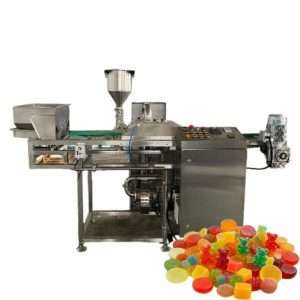
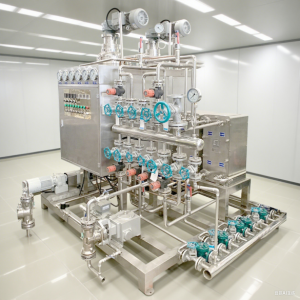
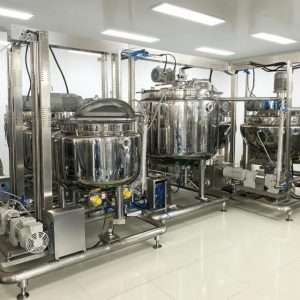
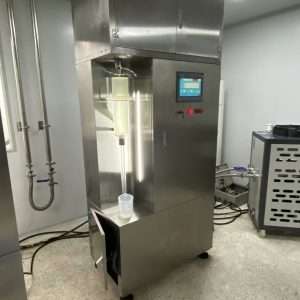
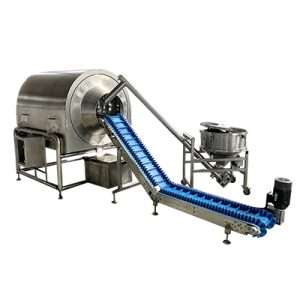
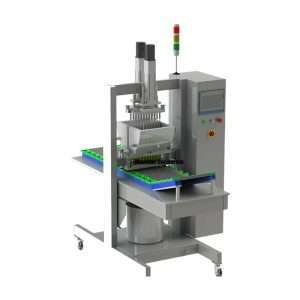
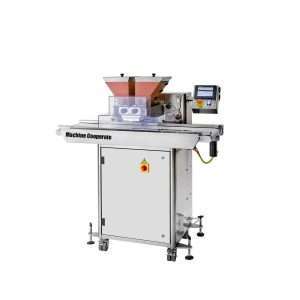
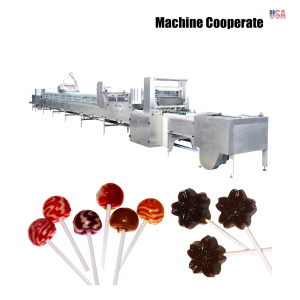
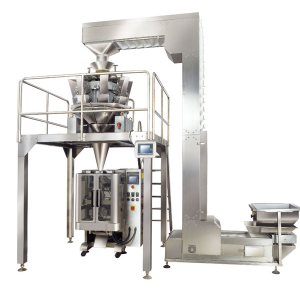
This state-of-the-art chocolate production equipment is specially designed for manufacturing a wide range of chocolates, including single-colored, filled, and nut-filled varieties. Combining advanced technology with full automation, it integrates multiple functions such as mold pre-heating, precise depositing, vibration settling, rapid cooling, and automated conveying—ensuring efficient, large-scale production of premium chocolates.
Click here to check this production line.







 Español
  English
  Português do Brasil