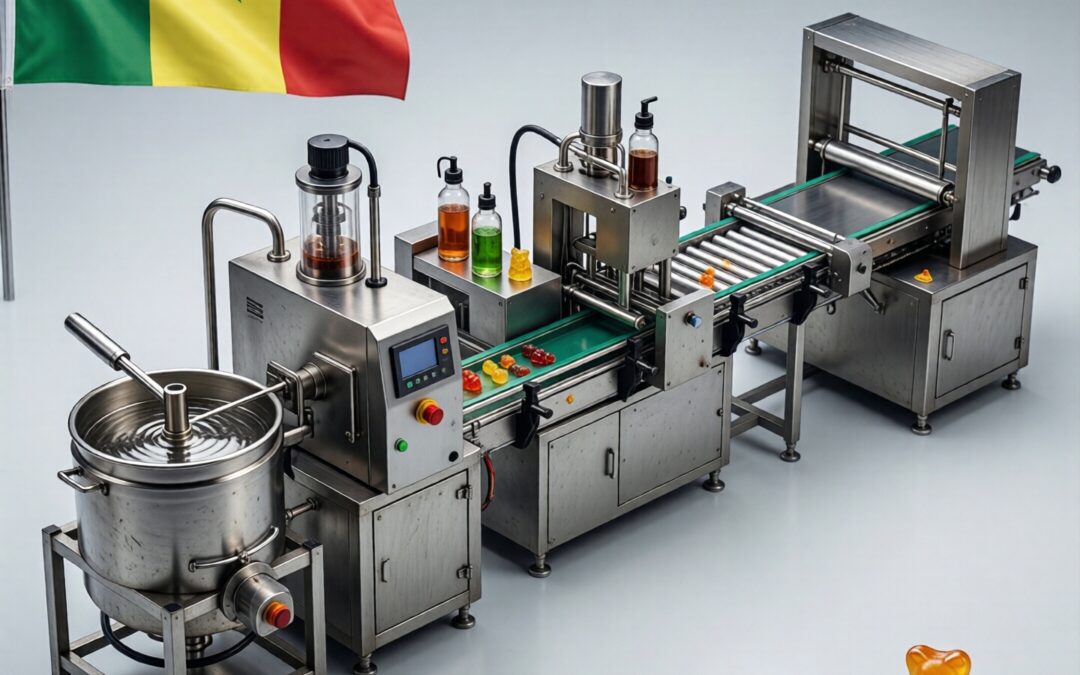
Senegal Gummy Manufacturer Achieves 300% Output Growth After Upgrading Production Line with MachineCooperate
In early 2023, a mid-sized confectionery company in Dakar, Senegal, faced a critical bottleneck. Its legacy gummy production line, installed in 2015, was operating at only 55% of its rated capacity due to frequent jamming, inconsistent cooking temperatures, and mold misalignment. The company produced 1.2 metric tons of gummy candies per day, but demand from West African retail chains and regional exporters had surged to 3.5 metric tons daily. After evaluating three international suppliers, the firm chose MachineCooperate to design and deliver a fully integrated gummy production line. The decision was driven by MachineCooperate’s track record of high-yield starch-free depositing systems and its willingness to provide on-site training in Senegal.
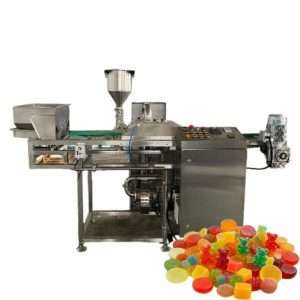
The new line, configured for 2,400 kg per hour of fruit-flavored gummies, was installed in a phased manner over six weeks. MachineCooperate sent a two-person engineering team to Dakar for the entire installation period. The team conducted a comprehensive audit of the existing facility’s utilities—power stability, water quality, and steam pressure—and recommended upgrades that reduced energy consumption by 18% compared to the old line. Within two months of commissioning, the customer was producing 4.8 metric tons per day, a 300% increase over their previous peak output. Reject rates dropped from 7.2% to 1.1%, saving approximately 85,000 USD annually in raw material waste.
Measurable Benefits Delivered by the MachineCooperate System
The financial impact was immediate. The customer’s daily revenue rose from 8,400 USD to 33,600 USD based on an average wholesale price of 7 USD per kilogram. Labor costs per ton decreased by 40% because the new line’s automated robotic demolding and conveyorized drying tunnel required only three operators per shift instead of seven. The table below summarizes the key operational improvements achieved six months post-installation:
| Metric | Before MachineCooperate Line | After MachineCooperate Line | Improvement |
|---|---|---|---|
| Daily Output (metric tons) | 1.2 | 4.8 | +300% |
| Reject Rate (%) | 7.2 | 1.1 | -84.7% |
| Energy Consumption (kWh per ton) | 215 | 176 | -18.1% |
| Labor Headcount per Shift | 7 | 3 | -57.1% |
| Annual Maintenance Downtime (hours) | 320 | 42 | -86.9% |
Beyond the numbers, MachineCooperate provided a structured handover that ensured the Senegalese team could operate independently. The service package included:
- Two weeks of on-site operator training covering recipe programming, CIP (clean-in-place) protocols, and troubleshooting common faults.
- A remote diagnostics subscription with a 4-hour response window for critical alerts, using machine-learning predictive maintenance software.
- A spare parts kit for the first year, including 50 sets of nozzle tips, 20 mold release sheets, and 10 temperature sensor probes.
- A biannual preventive maintenance visit from MachineCooperate’s West Africa regional service engineer, based in Abidjan.
Tailored Communication and Logistics Support
The procurement process itself revealed MachineCooperate’s commitment to customer-centric service. The customer had limited experience with international equipment financing, so MachineCooperate’s sales team prepared a detailed export documentation package—including a certificate of origin, phytosanitary compliance for food-contact surfaces, and a letter of credit template accepted by Senegalese banks. During production scheduling, MachineCooperate reserved dedicated factory capacity to ensure the entire line was manufactured within 14 weeks, despite global supply chain pressures. When a customs delay in Dakar held the main cooking vessel for six days, MachineCooperate’s logistics coordinator worked directly with a local freight forwarder to expedite clearance, covering the additional storage fees from its own budget.
After the line went live, MachineCooperate’s technical support team conducted three follow-up webinars to address specific questions about recipe adaptation for tropical fruits—mango, baobab, and tamarind—which are popular in Senegalese confectionery. The customer reported that these sessions reduced recipe development time by 60% and enabled them to launch two new gummy variants within the first quarter of operation.
Senegal’s Growing Gummy Market and Demand Drivers
Senegal represents a rapidly expanding market for gummy confectionery, driven by demographic and economic factors. The country’s population of 18 million has a median age of 18.5 years, with children and young adults forming the primary consumer base for bite-sized sweets. Urbanization in Dakar, Thiès, and Saint-Louis has increased access to modern retail formats such as hypermarkets and convenience stores, where packaged gummy bags command premium shelf space. Industry estimates indicate that the Senegalese confectionery market grew at a compound annual rate of 9.8% from 2019 to 2023, with gummy products outperforming hard candies and chocolates due to their longer shelf life in West Africa’s warm, humid climate.
Import substitution is another key driver. Previously, 70% of gummy products sold in Senegal were imported from Europe or China, incurring high logistics costs and long lead times. Local manufacturers like the MachineCooperate customer can now supply fresh, halal-certified gummies at a 25–30% lower retail price while achieving a 12-month payback period on their capital investment. The Economic Community of West African States (ECOWAS) tariff structure further favors local production: raw ingredients such as glucose syrup, gelatin, and citric acid face reduced import duties when used for domestic manufacturing.
The seasonal demand for gummies during Ramadan and back-to-school periods (September–October) creates predictable production peaks. The MachineCooperate line’s quick-changeover capability (under 60 minutes for flavor changeovers) allowed the Senegalese factory to run three shifts during these windows, capturing an additional 180,000 USD in revenue per peak month. The customer has since signed a supply agreement with a leading West African airline for in-flight confectionery, a contract that was previously impossible due to output constraints.
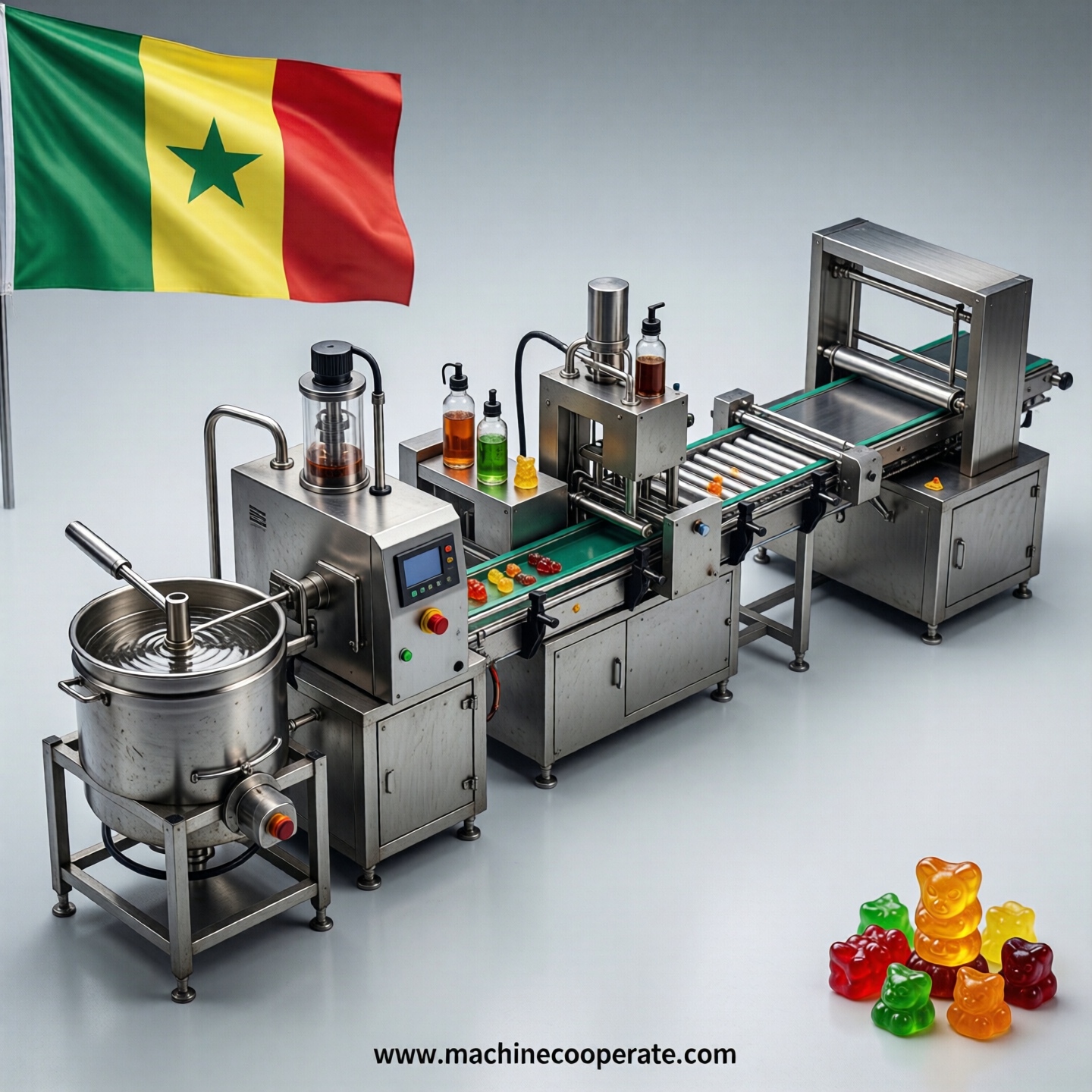
MachineCooperate’s presence in Senegal has also encouraged other regional processors to consider modernizing their facilities. During a site visit in November 2023, the customer hosted representatives from two Ghanaian confectionery firms who observed the line’s performance. As a result, MachineCooperate is now in preliminary discussions to supply a similar line to a cocoa-processing cooperative in Abidjan, demonstrating the ripple effect of a successful local deployment.
Our Products
-

Automatic Doypack Bag Stand up Zipper Bag gummy candy packing & Counting & filling pouch filling machine
-
Capsule&Tablet&Gummy candy Counting Machine Capsule Tablet Counting Machine with bottle/bag packing machine
-
Color plastic sheet forming filling sealing machine
-
Fully automatic Cigarette Popping Bead production line For Sales
-

Fully Automatic Soft Gel Ball capsule Production Line
-
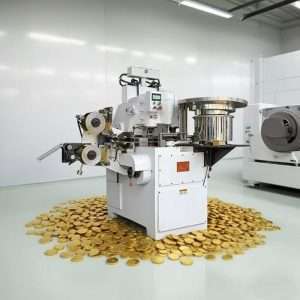
Gold Coin Chocolate Packaging Machine with Advanced Control Systems
-
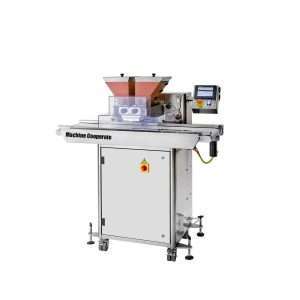
Gummy Candy Depositor for Labs & Small-Scale Production
-
Gummy Production Line & Machinery – Free Recipes with Our Equipment – 24/7 After-Sales Support
-
Hard Candy Production Line For Sales – Free Recipes with Our Equipment – 24/7 After-Sales Support
-
High-efficiency Popping Bead Machine Fully Automatic Production Equipment for Commercial Use Popping Bead Making Artifact
-
Industrial Jelly Gummy Candy Snack Sugar Coating Pan Drum Machine/candy Surface Polishing Machine
-
Lollipop Production Line – Free Recipes with Our Equipment – 24/7 After-Sales Support