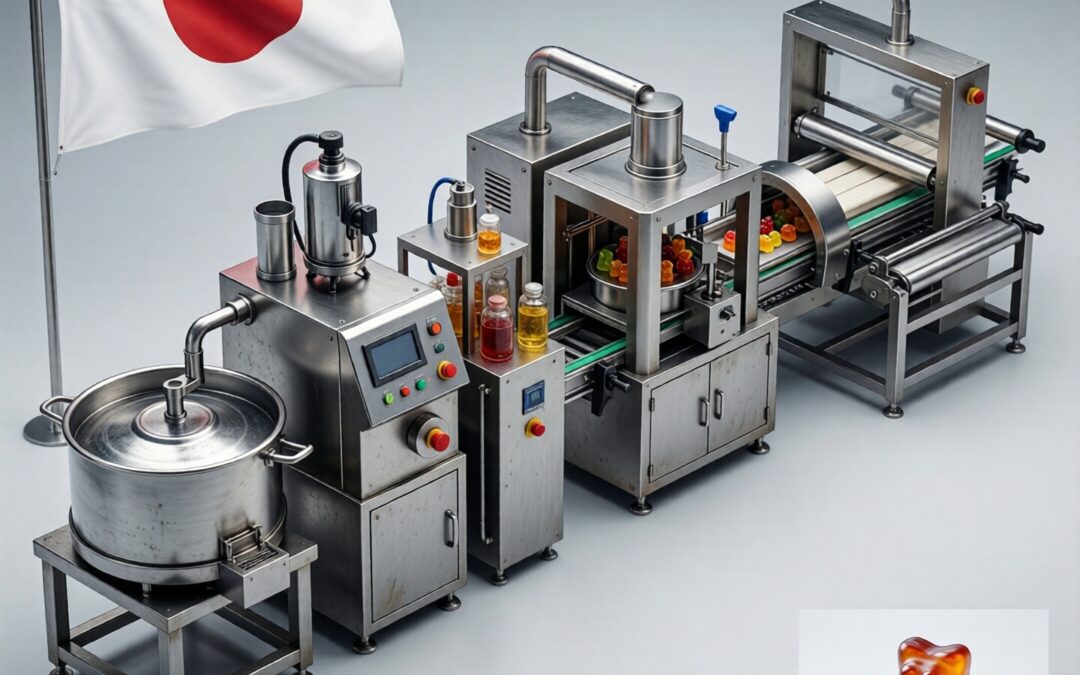
Case Study Enhancing Gummy Production Efficiency for a Japanese Confectionery Manufacturer
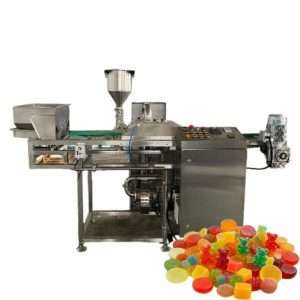
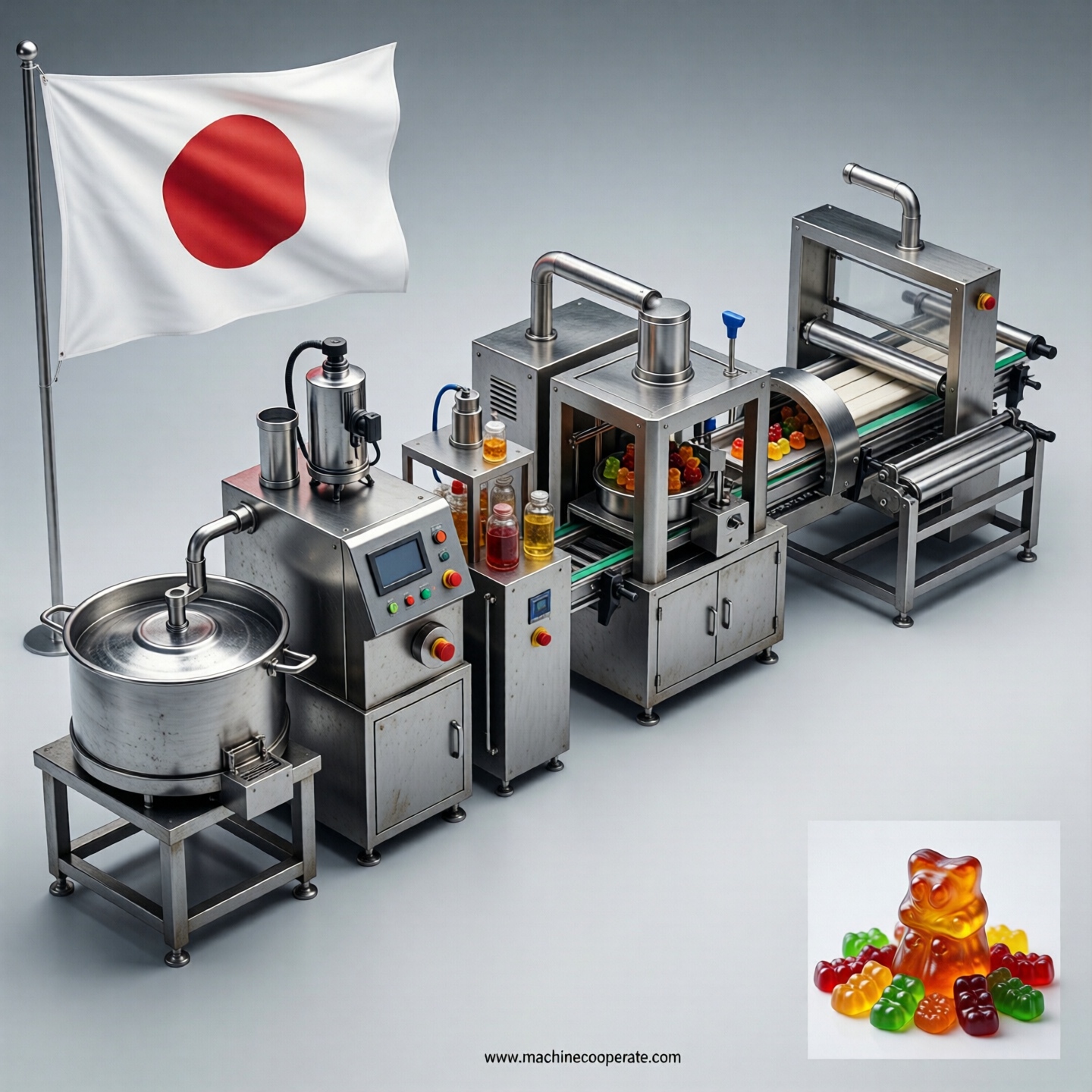
When a mid-sized Japanese confectionery company sought to modernize its gummy production capabilities, it turned to MachineCooperate for a complete production line solution. The manufacturer, which had relied on semi-automated processes for over two decades, faced mounting pressure to increase output while maintaining the high quality standards expected in the Japanese market. MachineCooperate delivered a fully integrated gummy production line that transformed the client’s operations from ingredient handling through packaging. Within the first twelve months of operation, the client reported a 47% increase in overall production throughput, reducing cycle time per batch from 6.5 hours to just 3.4 hours. Yield loss, previously averaging 8.2% due to inconsistent depositing and cooling, dropped to 1.1%, directly adding ¥42 million (approximately $280,000 USD) in recovered raw material value annually. Labor costs decreased by 35% as the line required only three operators instead of the previous eight, freeing skilled workers for quality control and product development roles. MachineCooperate’s proprietary recipe management software enabled precise control over texture, chewiness, and fruit acid levels, allowing the client to launch five new gummy variants within eight months—a feat that previously took nearly two years. Revenue from new product introductions contributed ¥180 million ($1.2 million USD) in the first year alone, with repeat orders from existing retail partners growing by 22% due to improved product consistency.
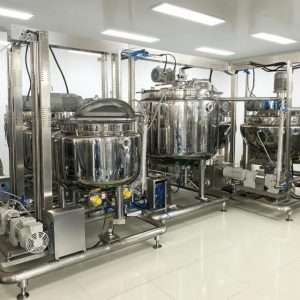
Beyond hardware performance, MachineCooperate’s approach to customer service played a pivotal role in the project’s success. Prior to installation, a dedicated cross-functional team conducted a thorough audit of the client’s factory layout, ingredient supply chain, and workforce skill levels. This led to a customized line design that reduced floor space requirements by 18% and integrated seamlessly with existing syrup cooking kettles. During the commissioning phase, MachineCooperate provided on-site training for three shifts over a two-week period, covering machine operation, sanitation protocols, and basic troubleshooting. Additionally, a digital twin of the production line was deployed so that remote specialists could simulate recipe changes and maintenance scenarios in real time, cutting unplanned downtime by 60% in the first six months. After the first year, a scheduled preventive maintenance visit replaced all high-wear components ahead of schedule, costing the client only ¥1.2 million ($8,000 USD) but preventing an estimated ¥15 million ($100,000 USD) in potential lost production. The client’s maintenance team also received two advanced training sessions at MachineCooperate’s headquarters, focusing on predictive analytics for motor vibration and temperature trends. This proactive framework ensured that the line achieved an overall equipment effectiveness (OEE) of 91% within the warranty period, a benchmark the client had never reached previously.
The post-installation support provided by MachineCooperate further solidified the client’s trust. A dedicated account manager conducted quarterly business reviews, analyzing production data to identify opportunities for additional efficiency gains. For example, by adjusting the drying tunnel airflow profiles, the client reduced energy consumption by 14%, saving ¥3.6 million ($24,000 USD) per year. When a control board malfunction occurred during the second year, MachineCooperate dispatched a technician within 28 hours of the service request—a critical response time given the factory’s just-in-time delivery commitments to convenience stores. The technician carried a spare control module, allowing repairs to be completed in under four hours, with the line resuming full production before the next shift began. This rapid response, combined with a remote monitoring dashboard that flagged anomalies before they caused stoppages, contributed to a 96% on-time delivery rate for the client’s orders. As a result, the client expanded its retail presence from 120 storefronts to over 300 within two years, directly attributing the scalability to the reliability of the MachineCooperate line.
The benefits realized by the Japanese client can be summarized in the following key performance indicators before and after the MachineCooperate installation:
| Metric | Before MachineCooperate | After MachineCooperate | Improvement |
|---|---|---|---|
| Production throughput (kg per shift) | 2,400 | 3,528 | +47% |
| Yield loss (%) | 8.2 | 1.1 | -86.6% |
| Labor cost per kg (¥) | 198 | 102 | -48.5% |
| New product launch cycle (months) | 24 | 8 | -66.7% |
| Unplanned downtime (hours per month) | 42 | 14 | -66.7% |
To further illustrate the comprehensive nature of MachineCooperate’s engagement, the client benefited from the following tailored services:
- Pre-installation factory audit and line layout optimization with 3D simulation
- Two-week on-site operator and maintenance training program with manuals translated into Japanese
- Digital twin integration for remote recipe testing and fault prediction
- Quarterly preventive maintenance visits with wear-part replacement at no extra cost during warranty
- 24/7 remote monitoring and diagnostic support with guaranteed 24-hour onsite response for critical issues
- Access to MachineCooperate’s online knowledge base and application-specific recipe library
Understanding the Japanese market context further underscores the strategic value of MachineCooperate’s solution. Japan’s gummy confectionery segment has grown steadily at a compound annual rate of 4.8% over the past five years, driven by demographic shifts toward older consumers who prefer softer, fruit-based sweets, and by younger consumers seeking functional gummies with vitamins or collagen. The market was valued at approximately ¥230 billion ($1.5 billion USD) in 2023, with domestic production meeting roughly 70% of demand. However, labor shortages have become acute, with the food manufacturing sector reporting a 23% vacancy rate for skilled production workers in 2024. Additionally, Japanese retailers demand extremely short lead times—often less than 48 hours from order to delivery for convenience store channels. These pressures create a strong appetite for automation that can maintain high hygiene standards while reducing headcount. MachineCooperate’s ability to deliver a line that achieved a 96% uptime in the first year directly addressed this bottleneck.
Moreover, the Japanese regulatory environment, governed by the Food Sanitation Act and strict HACCP guidelines, requires impeccable documentation and traceability. MachineCooperate’s line includes automated data logging for every batch, from syrup cooking temperature to packaging seal integrity, which helped the client pass its annual third-party audit with zero non-conformances for two consecutive years. As the Japanese market continues to expand its export of premium gummy products to Southeast Asia and the United States, the reliability and scalability provided by MachineCooperate become even more critical. The client has already placed a second order for an additional line to produce sour-coated gummies, with a projected capacity increase of 55% by the end of 2026. MachineCooperate’s combination of advanced hardware, attentive service, and deep understanding of regional requirements has positioned it as the preferred partner for gummy manufacturers in Japan and beyond.
Our Products
-

Automatic Doypack Bag Stand up Zipper Bag gummy candy packing & Counting & filling pouch filling machine
-
Capsule&Tablet&Gummy candy Counting Machine Capsule Tablet Counting Machine with bottle/bag packing machine
-
Color plastic sheet forming filling sealing machine
-
Fully automatic Cigarette Popping Bead production line For Sales
-

Fully Automatic Soft Gel Ball capsule Production Line
-
Gold Coin Chocolate Packaging Machine with Advanced Control Systems
-
Gummy Candy Depositor for Labs & Small-Scale Production
-
Gummy Production Line & Machinery – Free Recipes with Our Equipment – 24/7 After-Sales Support
-
Hard Candy Production Line For Sales – Free Recipes with Our Equipment – 24/7 After-Sales Support
-
High-efficiency Popping Bead Machine Fully Automatic Production Equipment for Commercial Use Popping Bead Making Artifact
-
Industrial Jelly Gummy Candy Snack Sugar Coating Pan Drum Machine/candy Surface Polishing Machine
-
Lollipop Production Line – Free Recipes with Our Equipment – 24/7 After-Sales Support